The King’s Warden (왕과 사는 남자): The Complete Film Review, Behind-the-Scenes Secrets, and the Box Office Phenomenon That Redefined Korean Cinema
※ This article was first published on April 27, 2026, and last updated on April 27, 2026.
This travel and cultural information is for general reference only and does not guarantee safety, accessibility, or current availability of destinations, services, or events. Travel conditions, entry requirements, and safety situations can change rapidly. Always check official sources and prioritize personal safety when traveling.
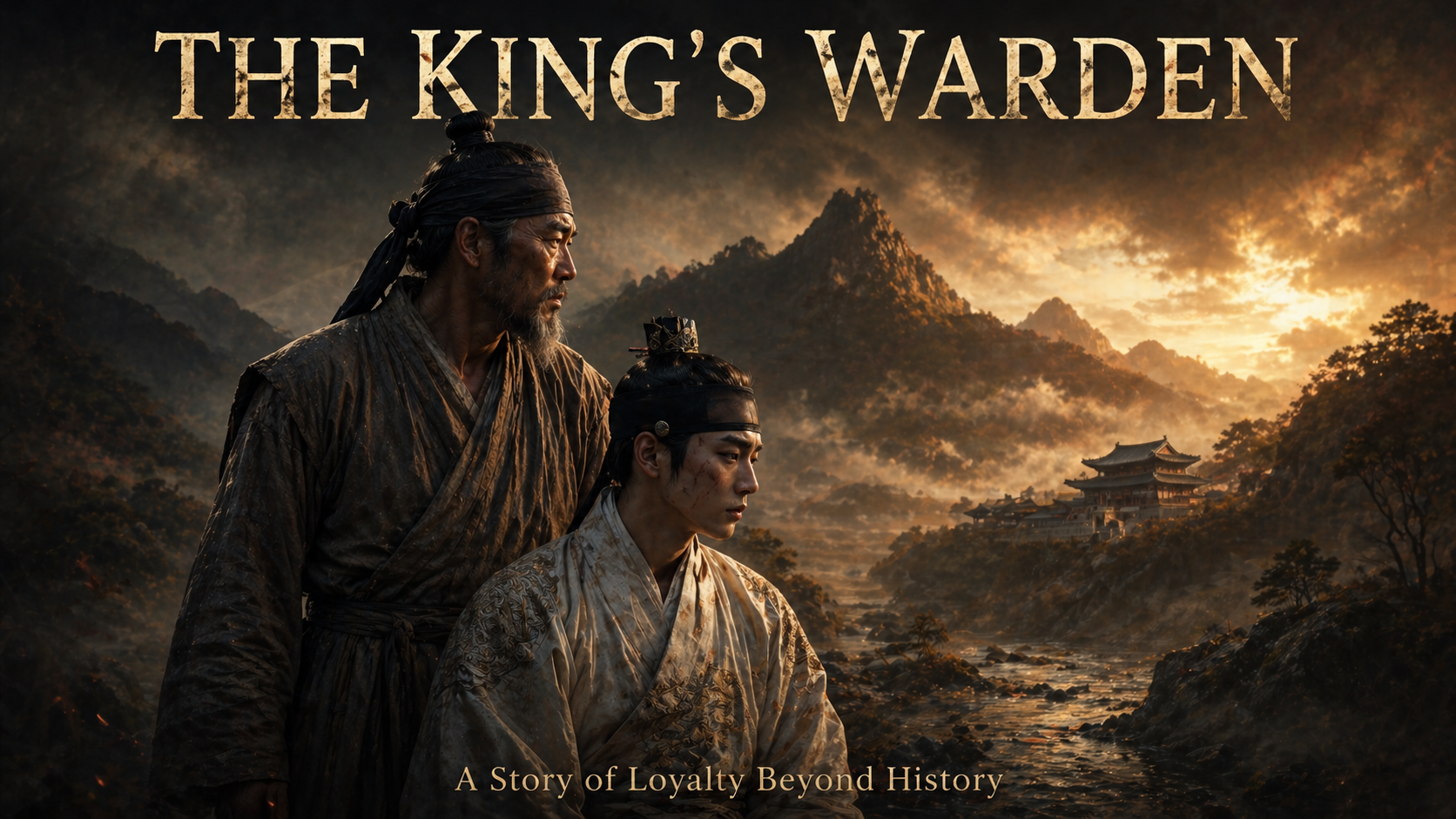
Cover image credit: Image generated by AI (ChatGPT, 2026). AI-generated images are strictly for editorial purposes only, comply with free commercial-use licenses (Unsplash, Pixabay, Pexels), and are not permitted for resale or standalone commercial use. Images do not depict actual people, places, or events.
Editorial & AI Assistance Notice: This article was prepared by HACKsKorea editors with AI assistance (Claude). All facts were verified against official and publicly available sources. This is general information only, not legal advice. Users must confirm the latest details through official government websites or authorized agencies.
Summary at a Glance
Imagine a country where a single film stops people mid-conversation, moves strangers on the subway to tears, and sends millions of pilgrims flooding into a remote mountain village in the dead of winter. That is exactly what The King’s Warden — known in Korean as 왕과 사는 남자 — has done to South Korea in 2026.
Released on February 4, 2026, this historical drama tells the story of Danjong (단종), the sixth king of the Joseon Dynasty, who was forced off the throne at just 16 years old by his ambitious uncle and exiled to a remote mountain village called Cheongnyeongpo (청령포) in Yeongwol (영월), Gangwon Province. At the center of the story is not the court, not the schemers, and not the warriors — but a poor village headman named Eom Heungdo (엄흥도), who takes in the exiled king with mixed motives, and ends up as the most loyal witness to one of Korean history’s most heartbreaking chapters.
Directed by Jang Hang-jun (장항준) — known internationally for the 2022 sports drama Rebound — and starring Yoo Hae-jin (유해진) as the bumbling but ultimately noble Eom Heungdo, alongside rising star Park Ji-hoon (박지훈) as the tragic young king, the film became a cultural phenomenon of a scale that South Korea had not seen in years.
By April 11, 2026, the film had attracted 16.28 million viewers, making it the second-highest-grossing Korean film in history by ticket sales and the all-time number one by total box office revenue, surpassing 155.3 billion KRW (approximately USD 113 million). To put that in perspective, in a country of 51 million people, roughly one in three Koreans has seen this film.
This review covers everything an international viewer needs to know: the full story, the real history behind it, the people who brought it to life, the controversies it sparked, and why — even if you have never seen a Korean historical drama — The King’s Warden is worth your time.
About the Film: Everything You Need to Know Before You Watch
Basic Film Information
The King’s Warden is a 2026 South Korean historical drama film produced by Ondaworks (온다웍스) and distributed by Showbox (쇼박스). The film runs approximately 122 minutes and carries a 12+ age rating in Korea, meaning it is suitable for most family audiences — a rare feat for a film that deals with political assassination, exile, and execution.
The English title, The King’s Warden, captures the dual role of Eom Heungdo: a man who is both the keeper of the deposed king’s physical space and, ultimately, the guardian of his dignity in death.
| Detail | Information |
|---|---|
| Korean Title | 왕과 사는 남자 |
| English Title | The King’s Warden |
| Director | Jang Hang-jun (장항준) |
| Release Date | February 4, 2026 |
| Runtime | Approximately 122 minutes |
| Age Rating | 12+ (Korea) |
| Production | Ondaworks (온다웍스) |
| Distribution | Showbox (쇼박스) |
| Budget | Approximately 10 billion KRW (USD 7.3 million) |
| Box Office | 155.3 billion KRW as of April 2026 |
The Cast
Yoo Hae-jin (유해진) plays Eom Heungdo, the village headman of Gwangcheongol (광천골). Known for his comedic roles in films such as Extreme Job and the Veteran franchise, Yoo here delivers what critics and audiences alike are calling the performance of his career — a deeply human portrait of a man caught between survival, self-interest, and, ultimately, love.
Park Ji-hoon (박지훈) plays Lee Hongwi (이홍위), the young deposed king who would go down in history as King Danjong (단종). Park, a former K-pop idol from the group Wanna One (워너원), had already demonstrated serious acting credentials in the 2022 drama Weak Hero before this film. His performance here — delivered after losing 15 kilograms over two months — is a revelation.
Yoo Ji-tae (유지태) plays Han Myeonghoe (한명회), the real-world political mastermind behind the 1453 Coup d’état known as the Gyeyujeongnan (계유정난), and the film’s primary antagonist.
Jeon Mi-do (전미도), known internationally for the drama Hospital Playlist (슬기로운 의사생활), plays Maehwa (매화), a palace lady-in-waiting who serves as a silent, steadfast protector of the young king throughout his exile.
Kim Min (김민) plays Eom Taesan (엄태산), the headman’s son, who becomes a student of the deposed king and represents the film’s most moving symbol of dignity across social class.
The Historical Context
To fully appreciate The King’s Warden, a basic grasp of the history is essential. Danjong — born Lee Hongwi — was the legitimate heir of King Munjong (문종) and the great-grandson of King Sejong (세종), the beloved ruler who created the Korean alphabet. He ascended to the throne in 1452 at just 11 years old, with no adult protector in the royal court.
His uncle, Prince Suyang (수양대군), exploited the young king’s vulnerability to seize power in the Coup of 1453, eliminating key court officials including the respected general Kim Jong-seo (김종서). By 1455, Suyang had pressured his own nephew into abdication, taking the throne for himself as King Sejo (세조). After a failed restoration attempt by a group of loyal scholars known as the Sayuksin (사육신 — the Six Martyred Ministers) was crushed in 1456, Danjong was demoted from his status as Retired King to the lesser title of Nosan-gun (노산군) and exiled to Yeongwol in 1457. He was 16 years old.
He would never leave.
The Complete Story: A Scene-by-Scene Journey Through The King’s Warden
Step 1: The Arrival — A King Without a Kingdom (도착: 왕국 없는 왕)
The film opens in the grim aftermath of the Gyeyujeongnan. We see the Six Martyred Ministers being executed — their deaths depicted in a nightmarish vision that will haunt Lee Hongwi throughout the film. Power has shifted. The boy who was once king is now Nosan-gun, a mere title, stripped of everything.
In Gwangcheongol — a fictional rendering of the Cheongnyeongpo area — village headman Eom Heungdo has a plan. He has visited a neighboring village, Norugol (노루골), which has flourished simply by hosting a noble exile. Seeing an opportunity to lift his own impoverished village out of poverty, Heungdo makes the unusual request to host an exile himself. What he does not anticipate is just how important — and how dangerous — his new guest will be.
The deposed king arrives by palanquin, pale and devastated. Accompanied by his loyal palace lady Maehwa, Lee Hongwi is a shadow of royalty: listless, silent, refusing to eat.
Step 2: The Crisis of Will — Between Life and Death (의지의 위기: 삶과 죽음 사이)
The most shattering early scene comes at night, when Lee Hongwi walks to the edge of a cliff on Yukyukbong (육육봉) — the towering rock face behind the village — and attempts to throw himself into the gorge below. Eom Heungdo, who had been watching from a distance, lunges forward and barely catches him.
In a line that reveals the practical heart of the story, Heungdo tells the weeping young man not that his life has value, or that history will remember him — but that if the deposed king dies on his watch, the entire village will be destroyed. It is self-interest disguised as rescue, and the film does not pretend otherwise. And yet, it is exactly this honest, unglamorous act of pulling someone back from the edge that begins to build the bond between the two men.
The following morning, Heungdo’s son Taesan brings food to the king — who still refuses to eat. The boy, who carries a working-class resentment of nobility, tells Lee Hongwi bluntly: every time you refuse to eat, the villagers become more afraid. You are not just hurting yourself. This is the moment Lee Hongwi begins to return to the living.
Step 3: The Bond Forged — Rice, Tigers, and Lessons (유대 형성: 쌀밥, 호랑이, 그리고 배움)
The film’s emotional center unfolds in a series of scenes that show the deposed king slowly finding his place among the villagers of Gwangcheongol. The most visually spectacular of these is the tiger hunt on Yukyukbong.
A tiger — a creature regarded in Korean tradition as the lord of the mountains, a symbol of royal power — appears and threatens the village. Lee Hongwi, despite his frail state, climbs the cliff and brings the animal down with a single arrow. The scene is loaded with symbolism: a king without a kingdom proving his worth in the wild. For the villagers, who have harbored private doubts about the cost of hosting such a dangerous guest, this act transforms their cautious wariness into something closer to reverence.
Then comes one of the film’s most beloved scenes: a shared meal of white rice — a luxury far beyond the means of these mountain villagers — eaten together at one table by the deposed king, the headman, his son, and the villagers. In 15th-century Joseon, where strict social hierarchy governed every interaction including where one sat and what one ate, this image is radical and quietly revolutionary.
Lee Hongwi also begins to teach Taesan to read and write, with the goal of helping the boy pass the civil service examination (과거). This student-teacher relationship between a deposed king and a village boy is the film’s most tender thread.
Step 4: The Threat Returns — Han Myeonghoe’s Shadow (위협의 귀환: 한명회의 그림자)
Into this fragile peace comes Han Myeonghoe, dispatched by King Sejo to monitor the exiled Nosan-gun and suppress any signs of a restoration movement. Yoo Ji-tae plays Han as a man of overwhelming, almost casual power — he does not need to shout or threaten; his mere presence is a reminder that the forces that destroyed Danjong’s world are still very much alive.
When Taesan accidentally enters the king’s quarters without permission and is beaten by Han’s soldiers for this breach of protocol, Lee Hongwi intervenes — and is publicly humiliated by Han in response. This is the moment the king decides he cannot remain passive. He will join a restoration attempt led by his uncle, Prince Geumseong (금성대군).
Step 5: The Failed Rising and the Final Goodbye (실패한 거사와 마지막 작별)
Prince Geumseong’s plan is uncovered before it can succeed. Lee Hongwi, attempting to flee to join the uprising, is ambushed by Han’s soldiers. In a desperate move to protect Eom Heungdo — who has been implicated by association — Lee Hongwi publicly denounces the headman as a traitor, framing him as an opponent of the plot. It is his final act of love.
The sentence is passed: Lee Hongwi is to receive the poison cup — the traditional royal death sentence. But the young king, who has reclaimed his dignity over these months in exile, refuses to die at the hands of his enemies. In the film’s most devastating scene, he asks Eom Heungdo to end his life himself — so that his death belongs to him, not to them.
Heungdo, weeping, uses the bowstring from a hunting bow to strangle the young king. It is brutal, tender, and unbearable. The palace lady Maehwa, watching from a distance, walks into the river.
Defying King Sejo’s explicit order that anyone who touched the body of the traitor would have their three generations of family destroyed, Eom Heungdo retrieves the king’s body in the dead of night and gives him a proper burial. This act — small, secret, and extraordinary — is what history chose to remember.
The Faces of Tragedy: A Character Deep Dive
Lee Hongwi (이홍위) — The King Who Learned to Be Human
What makes Park Ji-hoon’s performance remarkable is the arc he traces across the film. The Lee Hongwi of the early scenes is barely present — a pale, hollow figure who seems to be waiting for permission to disappear. The Lee Hongwi who faces death in the final act is composed, even regal, choosing the manner of his own death with a quiet authority that his throne never gave him.
Park lost 15 kilograms over two months — surviving, according to his own accounts, largely on apples — to achieve the physical frailness the role demanded. Director Jang Hang-jun has admitted that when he cast Park, he had no idea the young man was a former K-pop idol. He had seen him in the drama Weak Hero and simply assumed he was a veteran actor.
Eom Heungdo (엄흥도) — The Reluctant Hero
Yoo Hae-jin was born to play this role, and the film knows it. Heungdo is not a hero in any conventional sense. He is selfish, practical, sometimes petty. His initial motivation for hosting the exiled king is pure financial calculation. This is what makes his eventual loyalty so moving — it is not the loyalty of a man who believed in a cause from the beginning, but of a man who found himself, almost despite himself, unable to abandon someone he had come to love.
Han Myeonghoe (한명회) — Power Without Cruelty
Yoo Ji-tae’s Han Myeonghoe is not a cartoon villain. He is something more unsettling: a pragmatist who understands power with perfect clarity. His costumes — layered robes designed to increase his physical silhouette — and his unhurried movements communicate that he does not need to try. He simply is.
Maehwa (매화) — The Witness
Jeon Mi-do has almost no dialogue, and she does not need any. Maehwa is the film’s conscience, watching everything with an expression that carries all the grief the other characters cannot afford to show. Her final walk into the river requires no explanation.
Real-Life Viewer Experiences, Behind-the-Scenes Secrets, and the Box Office Phenomenon
Real-Life Viewer Case Examples
Emma Clarke — A Solo Traveler Who Found a History She Did Not Expect
(The following is a fictionalized scenario created for educational purposes. It does not describe any real person, event, or case.)
Emma, a 29-year-old teacher from Manchester, England, arrived in Seoul in January 2026 on a three-week solo trip. She had been drawn to Korea largely through K-pop and K-drama, with no particular interest in Korean history. A Korean friend suggested she see The King’s Warden during the Lunar New Year holiday, assuring her she did not need to know the history to understand the film.
Emma watched it with Korean subtitles projected in English, and she was in tears before the halfway point. What struck her most was not the tragedy — she had expected sadness — but the humor in the early scenes, the ridiculous practicality of Heungdo, and the moment when the deposed king and the village boy share rice at the same table. She left the cinema and immediately searched for Yeongwol on her phone. She changed her travel plans and spent a day at Cheongnyeongpo before flying home.
Key Lesson: You do not need to be a history expert to feel this film. The emotions are universal.
Marcus Webb — A Film Critic Who Changed His Mind
(The following is a fictionalized scenario created for educational purposes. It does not describe any real person, event, or case.)
Marcus, a 44-year-old freelance film critic from Chicago, caught an early screening of The King’s Warden at a Korean cultural event in Los Angeles. His initial review was measured — he praised the performances but found the structure somewhat predictable. After the film broke 10 million tickets in Korea, he revisited his notes and wrote a follow-up piece arguing that his first viewing had missed the point entirely. The film, he concluded, was not about historical tragedy. It was about what small people do in the face of enormous power — and whether that constitutes heroism.
Key Lesson: This is a film that rewards a second viewing, and possibly a third.
Yuki Tanaka — A Japanese Tourist Who Made a Detour
(The following is a fictionalized scenario created for educational purposes. It does not describe any real person, event, or case.)
Yuki, a 33-year-old graphic designer from Tokyo, had planned a five-day Seoul itinerary focused entirely on food. She saw The King’s Warden on her second night in the city, on a whim, and spent the next morning researching Joseon Dynasty history. She extended her trip by two days to visit Yeongwol, posting her journey to her Instagram account where it received more engagement than anything she had previously shared about Korea.
Key Lesson: The King’s Warden has become a gateway into Korean history for international visitors who might not have sought it out otherwise.
Sofia Ramirez — The Power of Shared Grief
(The following is a fictionalized scenario created for educational purposes. It does not describe any real person, event, or case.)
Sofia, a 26-year-old graduate student from Mexico City studying Korean at university, watched The King’s Warden with her study group. She had learned enough Korean history to understand the context but was unprepared for the emotional scale of the ending. What she found most striking, in her subsequent essay on the film, was the way Korean audiences responded collectively — the entire cinema seemed to exhale together at key moments, a shared grief that felt almost communal. She described it as one of the most moving cinematic experiences of her life, independent of the film’s quality.
Key Lesson: Watching this film in a Korean cinema is an experience in itself — the audience is part of the event.
David Okafor — A History Teacher Who Found a Teaching Tool
(The following is a fictionalized scenario created for educational purposes. It does not describe any real person, event, or case.)
David, a 51-year-old high school history teacher from London, used a clip from The King’s Warden — specifically the scene of the Six Martyred Ministers’ execution — as part of a unit on political power and loyalty. He found that students who had seen the film were far more engaged in subsequent discussions about the nature of political legitimacy and the cost of resistance. Several students requested further reading on the Joseon period.
Key Lesson: The King’s Warden works as a piece of cinema and as a historical entry point. Both uses are valid.
Mei Lin — A First-Time Korean Film Viewer
(The following is a fictionalized scenario created for educational purposes. It does not describe any real person, event, or case.)
Mei, a 22-year-old student from Singapore with no previous interest in Korean cinema, watched The King’s Warden at a friend’s insistence, expecting to be bored. She was not. What surprised her most was the humor — the early scenes of Heungdo’s transparent self-interest, played for gentle comedy, made her laugh out loud before the film pivoted toward its tragic final act. She described the tonal shift as the most skillful piece of filmmaking she had witnessed in years.
Key Lesson: Do not let the historical setting or the tragic premise put you off. This film knows how to use humor.
Behind the Lens: The Making of The King’s Warden
A Director Who Almost Said No
Jang Hang-jun, in multiple post-release interviews, has been candid about his initial reluctance to make this film. He knew the history. He knew the ending. A film in which the outcome is completely predetermined before the opening scene — how do you sustain dramatic tension? It was watching Jang Hoon’s 2023 historical thriller 12.12: The Day (서울의 봄), which dramatized another event whose outcome Korean audiences already knew intimately, that convinced him it was possible.
The other voice in his head was that of his wife, the celebrated screenwriter Kim Eun-hee (김은희, creator of Kingdom and Signal), who read the screenplay and told him simply: do it.
The decisive creative element was a single imaginative leap in the original script by writer Hwang Seong-gu (황성구): the idea that the person who strangled Danjong — recorded in historical sources as a lowly government runner — and the person who later retrieved his body for burial — recorded as the village headman Eom Heungdo — might have been the same man. The historical record supports no such identification. The creative logic is devastatingly beautiful.
A Title That Almost Wasn’t
During early development, the film was titled Heungdo: The Man Who Lived with the King (흥도: 왕과 사는 양반). This was later adjusted to The Man Who Lives with the King (왕과 함께 사는 남자) before the team settled on the current, tighter title. Director Jang has admitted that he worried about the title being misread as the setup for a BL (boys’ love) romance. The marketing team stood firm, and so did the title.
Park Ji-hoon’s 15-Kilogram Transformation
When Park Ji-hoon received the script, he made a decision that would define the film’s visual and emotional register: he would lose weight — significant weight — to capture the physical deterioration of a king stripped of everything, including adequate food. Over two months, he maintained an extreme diet that consisted largely of apples, losing 15 kilograms before principal photography began.
The result is visible in every frame. The Park Ji-hoon who appears in the film’s opening scenes looks genuinely unwell — gaunt, with the luminous pallor of someone hovering between presence and absence. As the film progresses and Lee Hongwi begins to recover his will to live, the changes in Park’s face and posture are subtle but unmistakable.
Director Jang, who cast Park entirely on the strength of his dramatic work in Weak Hero, has said he was genuinely unaware that the young man was a former idol. Learning that Park Ji-hoon was from Wanna One — one of Korea’s most successful K-pop groups — was, in Jang’s telling, a source of considerable surprise.
Yoo Hae-jin’s Day of Tears
The film’s final sequence — in which Eom Heungdo must carry out the execution of the young king he has come to love — required Yoo Hae-jin to sustain an almost unendurable level of emotional exposure. By multiple accounts from the production team, Yoo arrived on set that morning already in tears. He remained in tears throughout the day’s shooting. Director Jang has said he was afraid to speak to his lead actor for much of the day, sensing that Yoo had entered a space where interruption would only do damage.
Yoo’s own account of his approach to the scene: “I tried to hold onto nothing except Heungdo’s feeling in that moment. No calculation. Just that.”
Jeon Mi-do: The Role That Almost Didn’t Exist
The character of Maehwa — the palace lady-in-waiting — originally had almost no presence in the screenplay. She was a composite of the historical attendants who accompanied Danjong into exile, compressed into a single unnamed figure. When Jeon Mi-do, who had been declining scripts for months due to concerns about content, read this one and agreed to participate, the production rewrote her scenes to give the character more weight and screen time.
Director Jang has said, with characteristic candor, that he “sent the script as a bit of a wild shot” and was genuinely surprised she agreed. For Jeon, the deciding factor was simpler: after reading scripts full of violence and provocation, she was drawn to a story about warmth.
The Tiger CG Controversy
No review of The King’s Warden would be complete without mentioning the tiger. The pivotal scene in which Lee Hongwi kills the mountain tiger on Yukyukbong was widely praised as one of the film’s most symbolic set pieces — and equally widely criticized for the quality of its computer-generated imagery. Online audiences pointed out, with considerable energy, that the tiger’s movement and integration with the live-action footage fell below the standard set by recent productions.
The production company Ondaworks subsequently announced they would be redoing the tiger CG, with producer Lim Eun-jung acknowledging that the team felt the same dissatisfaction as the audience. She called it “an opportunity created by the viewers” — a gracious framing that was nonetheless received as a genuine commitment to improvement.
A Budget That Said No to Waste
The King’s Warden was made for approximately 10 billion KRW — a modest budget for a production of this ambition. Director Jang has described a deliberate policy of zero-waste filmmaking: if a scene was not going to survive the edit, it was not shot. The result is a film with, reportedly, no deleted scenes at all.
For action sequences — battle moments, crowd scenes — the production used dummies for fallen soldiers and brought background performers back to life off-screen, resetting them to run into frame from a different direction. It is the kind of creative problem-solving that comes from necessity and produces, occasionally, results that larger budgets do not require.
The Plagiarism Storm: A Controversy Explained
In March 2026, as The King’s Warden was approaching 10 million tickets, a controversy emerged that briefly threatened to overshadow the film’s achievement.
The family of a theatre actor who died in 2019 — identified in reports only as Eom, a claimed 31st-generation descendant of the historical Eom Heungdo himself — came forward with an allegation of plagiarism. The deceased had, according to the family, written a television drama screenplay titled Eom Heungdo in the 2000s and submitted it to a broadcaster. The family alleged that this screenplay bore substantial similarities to The King’s Warden, citing at least seven specific points of convergence.
The alleged similarities included: the scene in which Danjong is persuaded to eat through emotional appeal rather than obligation; the scene in which the deposed king’s fall from a cliff is interrupted by the headman; the compression of Danjong’s multiple palace ladies into a single character named Maehwa; and the depiction of Eom Heungdo’s son as an only child rather than one of three sons, as historical records suggest.
The family stated that their primary desire was not financial compensation but recognition — they wished to see their father’s name acknowledged as an original source.
Ondaworks responded swiftly and firmly, categorically denying that anyone involved in the production had ever encountered the earlier work. The company stated that The King’s Warden is an original creative work with clearly documented development history, and announced its intention to pursue the matter through legal channels if necessary.
As of the time of this article’s publication, no legal proceedings have been initiated, and the matter remains unresolved. For international viewers, the controversy — whatever its merits — has not diminished the film’s emotional power or historical significance.
The Box Office Phenomenon: Numbers That Tell a Story
The King’s Warden did not arrive as a guaranteed hit. Director Jang had experienced his own box office disappointment with Rebound in 2023, which had been outperformed by the Japanese animated film Suzume no Tojimari. The production team was cautious in their expectations.
What happened instead was a slow-burn phenomenon that Korean cinema had not seen since the similarly word-of-mouth-powered 12.12: The Day. The film opened on February 4, 2026 — the start of the Lunar New Year holiday — and attracted 110,000 viewers on its first day. Within five days, it had crossed 1 million tickets. Within 14 days, it had recouped its entire budget.
Then something unusual occurred. In most films, the second and third weeks of release see a sharp drop in viewership. The King’s Warden did the opposite: its weekly audience numbers grew across the first four weeks of release. The film’s word-of-mouth curve — driven heavily by younger female audiences who connected deeply with Park Ji-hoon’s performance and the film’s resonant historical narrative — created what analysts described as the most powerful sustained audience momentum since 12.12: The Day.
By March 6, 2026 — 31 days after release — the film had crossed 10 million tickets, becoming the 34th Korean film ever to achieve that milestone, and the 25th Korean-language film. By April 11, 2026, it had reached 16.28 million tickets, becoming the second-highest Korean film ever by audience numbers and the all-time leader in box office revenue.
The film’s international footprint also exceeded expectations. By mid-March, it had surpassed the North American theatrical records of Crime City 4 in its second week of release, and had overtaken 12.12: The Day and Extreme Job in its third week. It was screening in 80+ cities across the United States and Canada, with additional markets in Taiwan, Indonesia, Singapore, Australia, and New Zealand. In April, the film received an invitation to the 28th Udine Far East Film Festival (우디네극동영화제), one of Europe’s most prestigious showcases for Asian cinema.
The film also prompted an immediate and measurable shift in cultural attention: visits to the historical site of Cheongnyeongpo in Yeongwol increased by more than five times during the Lunar New Year holiday compared to the same period the previous year, with queues forming at the river crossing for the first time in the site’s recent memory.
FAQ
1. Do I need to know Korean history to enjoy The King’s Warden?
Not at all. While some familiarity with the broad outlines of the Joseon Dynasty will enrich your viewing experience — particularly if you already know who King Danjong and King Sejo were — the film works entirely as a human drama for viewers who are approaching it cold.
The emotional core of the story is universal: a man of modest means and complex motives forms a profound bond with a young person he was not expecting to care about. The tragic outcome is signaled from the film’s opening frames, but director Jang Hang-jun manages to sustain both warmth and tension even when you know where it ends.
That said, a brief overview of the historical context — available in this article’s “About the Film” section — will help you understand the weight of certain scenes, particularly those involving Han Myeonghoe and the references to the Six Martyred Ministers.
If you are in Korea when you watch, the film is screened with Korean audio. Most major cinema chains in Seoul — including CGV, Lotte Cinema, and Megabox — offer English subtitles for international screenings, though availability varies by location. It is worth checking the cinema’s app or website in advance.
2. How historically accurate is The King’s Warden?
The film takes significant creative liberties, and director Jang Hang-jun has been transparent about this. The most substantial departure from the historical record is the film’s central conceit: that Eom Heungdo — the historical village headman who buried Danjong’s body in defiance of royal decree — was the same person who carried out the execution. Historical sources, including the Yeollyeosil Gisul (연려실기술), record the executioner as an unnamed government servant, not as Heungdo himself.
Other significant fictional elements include: Eom Heungdo is given one son in the film; historical records suggest he had three. The palace lady Maehwa is a composite of several historical figures. The direct, close relationship between Danjong and Heungdo depicted in the film is based on oral tradition passed down through Heungdo’s descendants, not on official historical records.
The film’s depiction of period dress, architecture, and social hierarchy has received generally favorable assessments from historians, with some specific criticisms regarding certain costume choices and color conventions that were not standard for early Joseon-period formal wear.
3. Where was the film actually shot? Is Cheongnyeongpo in the movie?
Cheongnyeongpo (청령포) — the actual historical site of Danjong’s exile in Yeongwol, Gangwon Province — is the film’s primary setting in narrative terms, but not in production terms. The site is a protected historical area, and large-scale film production would have caused unacceptable damage to its preserved landscape.
Instead, the production team built detailed sets at Seondeol (선돌) — a spectacular natural rock formation along the Seogang River in Yeongwol — and at the Mungyeongsaejae (문경새재) open-air film set in North Gyeongsang Province, which has served as a backdrop for numerous Korean historical productions.
Cheongnyeongpo itself, however, is very much worth visiting. The actual site preserves the Danjong Royal Residence (단종어소), the 600-year-old Gwaneumsonng Pine (관음송), the Mangyangtap (망향탑) stone tower that Danjong is said to have built himself, and the Nosandae (노산대) cliff where he is recorded to have spent hours gazing toward the distant capital. It remains open to visitors year-round and is accessible by a short boat crossing from the riverbank.
4. Who is Eom Heungdo in real history, and was he really a hero?
The historical Eom Heungdo (엄흥도) was the hojang (호장) of Yeongwol — essentially the administrative head of the local civilian population, below the rank of the appointed government official but above ordinary residents in terms of local authority. His family had deep roots in the region.
What the historical record preserves about him is remarkable in its specificity: when King Sejo issued the decree that anyone who retrieved Danjong’s body would face the destruction of three generations of their family, Eom Heungdo defied this order in the middle of the night, secretly retrieved the body from where it had been discarded in the river, and buried it with appropriate funerary rites at a location on the western outskirts of Yeongwol.
He then fled with his family, scattering them to avoid punishment. They lived in hiding for years.
His act was not recognized during his lifetime or for many decades afterward. It was only during the reign of King Hyeonjong (현종) in the mid-17th century — two hundred years later — that his descendants were restored to official standing. In 1709, during the reign of King Sukjong (숙종), Eom Heungdo was enshrined at Changjeolsa (창절사), honored alongside the Six Martyred Ministers. In 1876, under King Gojong (고종), he received the posthumous title of Chunguigong (충의공) — meaning the Duke of Loyal Righteousness. His grave is now believed to be most likely located in Gunwi County (군위군) in Daegu Metropolitan City.
5. What is the significance of the bowstring in the final scene?
The film’s most devastating creative decision is also its most historically rooted. The historical method of royal execution by strangulation — using a bowstring rather than a sword or poison, in cases where the condemned was of sufficient status to avoid a visibly bloody death — is documented in Korean historical sources.
In the film, the choice of instrument carries additional weight. The bow has already appeared in the tiger scene as a symbol of the young king’s reclaimed agency and dignity — his ability to protect, to act, to be more than a passive victim of history. The bowstring used in his execution is therefore freighted with that earlier meaning: the instrument of the tiger hunt becomes the instrument of the final act. It is a formal rhyme that the film earns completely.
For Korean audiences familiar with the historical associations, the image carries still further resonance: execution by strangulation was considered a more dignified death than beheading, reserved for those of noble or royal blood. That Danjong chooses this method — and chooses who administers it — is the film’s final assertion that dignity cannot be taken away, only surrendered.
6. Why did the film become such a massive hit when Korean cinema was struggling?
The King’s Warden arrived at a moment when the Korean film industry was, by almost any measure, in crisis. The post-pandemic recovery that industry analysts had expected had not materialized. Japanese animated films were outperforming Korean-language productions at the domestic box office. 2025 ended without a single film crossing 10 million tickets — a benchmark that had once seemed almost guaranteed several times a year.
Into this environment came a film that did several things simultaneously: it worked as a family-friendly experience accessible to grandparents and children; it gave younger female audiences a charismatic male lead in Park Ji-hoon whose performance generated significant social media engagement; it grounded its story in a historical period that Korean audiences carry deep emotional associations with; and it managed to be genuinely funny in its first act before breaking hearts in its third.
The resulting word-of-mouth was not the viral burst that social media often generates — here today and forgotten next week — but something more durable: a sustained, multi-generational conversation about the film that kept building across the Lunar New Year holiday, into the following weeks, and through the March 1st Independence Movement Day holiday.
7. How does The King’s Warden fit into the broader landscape of Korean historical dramas?
Korean historical drama — sageuk (사극) — has a long and distinguished tradition both in cinema and television. Films such as The Admiral: Roaring Currents (명량, 2014), currently the all-time record holder by audience numbers at 17.61 million tickets, The Throne (사도, 2015), and The Face Reader (관상, 2013) have established a genre that audiences trust and that carries consistent commercial weight.
What distinguishes The King’s Warden within this tradition is its deliberate choice to locate its story outside the palace. Other sageuk tend to center on royal courts, political machinations, military campaigns, or the intrigues of the aristocracy. Jang Hang-jun was explicitly interested in showing what Joseon looked like from the mountain village — from the perspective of people who had no political power and no voice in the events that shaped their lives, but who nevertheless made choices that history eventually recognized as significant.
This shift in perspective — from power to the margins of power — gives the film a quality that critics have struggled to quite name: it is historical, but it does not feel grand. It is tragic, but it does not feel operatic. It is intimate in a way that most sageuk are not, and that intimacy is what seems to have reached audiences across lines of age, gender, and cultural background.
8. Is there an English version or subtitles available for international viewers?
As of April 2026, The King’s Warden is screening in international markets including the United States, Canada, Australia, New Zealand, Taiwan, Indonesia, and Singapore. English subtitles are available in all international screenings.
Korean audiences at domestic screenings have access to the film in its original Korean audio. For non-Korean speakers watching at cinemas in Korea, English subtitle screenings are available at selected major venues in Seoul — particularly at CGV (씨지브이) Yongsan, CGV IMAX locations, and at some Megabox (메가박스) branches. It is strongly advised to check the cinema’s website or app in advance and to book early, as English subtitle screenings are limited in frequency.
For viewers who have access to the film through streaming platforms, subtitle options are expected to expand as the film moves from theatrical to digital distribution, though no official streaming release date has been confirmed as of this article’s publication.
9. What do international critics say about the film?
Critical reception outside Korea has been generally positive, with reservations. The Guardian’s British film critic Phil Hoad gave the film three out of five stars, describing it as “a vivid piece of Korean cinema” that attempts to navigate between irony, sentiment, and social commentary — and does not always hold its balance — but is “redeemed by Yoo Hae-jin’s confident performance.” The review compared the film’s early tone to the Ealing Studios tradition of ironic British comedy, which is not the comparison any Korean marketing team would have anticipated.
Korean critics were somewhat more divided. The influential film journal Cine21 polled seven critics, arriving at an average score of 6.57 out of 10. Reviewer Jeong Jae-hyeon gave it 6, calling it “a sageuk poised at the intersection of everyday ambition and historical tragedy.” Reviewer Yang Gyeong-mi praised the casting and historical ambition while noting that the screenplay’s structural resolution felt somewhat underwritten.
The gap between these critical assessments and the audience response — measured in 16 million tickets — is not unusual for a film of this kind, and should not be taken as a definitive guide to anyone’s personal experience.
10. What is the Danjong Cultural Festival, and can international visitors attend?
The Danjong Cultural Festival (단종문화제) is an annual heritage festival held in Yeongwol every spring to commemorate the life and memory of the exiled king. The 59th festival is scheduled for April 24 to 26, 2026, at Jangneung (장릉) — Danjong’s royal tomb — and surrounding sites in Yeongwol.
The festival includes a royal funeral procession reenactment (단종국장), memorial rites (단종제향), traditional rope-pulling competitions (칡 줄 다리기), folk performances, and local food markets. All outdoor events are free to attend for the general public, though some specific programs may require advance registration.
International visitors are warmly welcomed, and the festival has historically provided some English-language materials at the main information booth. It is advisable to contact the Yeongwol Cultural Foundation (영월문화관광재단) in advance at 033-374-7773 for the most current program information and any accessibility needs. Yeongwol is accessible from Seoul by train via Cheongnyangni (청량리) Station, with a journey time of approximately two hours.
11. How should I watch The King’s Warden to get the most from it?
For international viewers approaching the film for the first time, the following suggestions may help.
Allow time before viewing to read a brief summary of the Joseon Dynasty power structure: understanding that King Sejo was Danjong’s uncle, that his seizure of the throne was accomplished through violence against court officials, and that restoration attempts were punished with death, will make the stakes of the story immediately legible.
Do not watch the trailer first if you can avoid it. Korean film trailers tend to be comprehensive in ways that diminish the experience of discovery.
Watch in the best available audio environment. The film’s score, composed by Dalparan (달파란), uses traditional Korean instrumentation in ways that are most effective at moderate to high volume.
Be prepared for a tonal shift. The first act of the film is genuinely funny. Do not let this surprise you into believing the film will remain light.
12. What is the film’s attitude toward King Sejo (세조)?
This is one of the more interesting questions the film raises without quite answering. King Sejo himself barely appears in the film — his presence is felt almost entirely through Han Myeonghoe, his proxy. This is a deliberate choice.
In Korean history and popular culture, Sejo occupies an awkward position. He was, by any objective measure, an effective ruler: his reign saw significant administrative reform, the compilation of legal codes, and the strengthening of central authority. But the method of his ascension — the violent displacement of a legitimate child king — has never been forgiven by historical memory.
The film does not engage in rehabilitation. It also does not spend time on vilification. What it does instead is show the cost of Sejo’s triumph as experienced by people who had no power to resist it — and leaves the audience to form its own judgment.
Director Jang, in interviews, has framed the film’s central question as: when power succeeds through injustice, does the passage of time make that injustice acceptable? The film does not answer this question. It simply makes certain that you feel it.
13. How does the film handle the historical complexity of Eom Heungdo’s motives?
This is where the film’s intelligence is most evident. The screenplay never pretends that Eom Heungdo is a simple hero. His initial decision to host the exiled king is nakedly self-interested: he wants his village to prosper, as a neighboring village prospered by hosting a noble exile. He calculates. He complains. He is afraid.
The film allows this complexity to persist well past the point at which a more conventional narrative would have tidied him up into pure heroism. Even as his affection for the young king deepens, Heungdo’s fundamental practicality does not disappear. He saves the king’s life because the king’s death on his watch would destroy the village — and then, gradually, also because he has come to care about this young man.
This layered portrayal is what makes the final act so unbearable. Heungdo does what Danjong asks of him not because he is a hero, but because he is, by this point, something more complicated than a hero: he is a person who has learned to love, and who finds that love demands an impossible thing.
14. Is the film appropriate for children?
The King’s Warden carries a 12+ rating in Korea, and this seems appropriate for international contexts as well. The film contains scenes of emotional violence — including a nightmare sequence depicting the execution of the Six Martyred Ministers, the king’s attempted suicide, and the film’s final execution scene — that may be distressing for younger children.
For children in the 10-12 age range who are already engaged with Korean history, or who have a general comfort with historical drama, the film is manageable. The execution of Danjong is depicted with restraint — there is no graphic imagery — but the emotional weight is significant.
For family viewing, it is advisable to watch the film first as an adult and make an assessment based on the specific sensitivities of the children involved.
15. What other Korean films would I enjoy if I liked The King’s Warden?
If the historical drama element appealed to you, consider: 12.12: The Day (2023), which dramatizes the 1979 coup led by Chun Doo-hwan and was one of the most discussed Korean films of the decade; The Throne (사도, 2015), a deeply affecting account of the tragic relationship between King Yeongjo and his son Crown Prince Sado; and Masquerade (광해: 왕이 된 남자, 2012), which imagines a royal doppelganger taking the king’s place during a period of political crisis.
If you were drawn more to the emotional texture and Yoo Hae-jin’s performance, his earlier work in Extreme Job (극한직업, 2019) — Korea’s highest-grossing comedy — offers a very different but equally compelling showcase.
16. What is the film’s score like, and who composed the music?
The King’s Warden was scored by Dalparan (달파란), one of Korea’s most respected composers for film and television. Dalparan has built a reputation for integrating traditional Korean instrumentation — gayageum (가야금), haegeum (해금), and taepyeongso (태평소) — with orchestral arrangements in ways that feel neither self-consciously ethnic nor generically Western.
In The King’s Warden, the musical approach reflects the film’s own thematic priorities: the score is loudest not in scenes of political intrigue or action, but in moments of quiet human connection. The shared meal of white rice is accompanied by a theme built around the gayageum that is almost painfully gentle. The final execution sequence — which many audience members have described as physically painful to sit through — is scored with restraint rather than manipulation, trusting the performances rather than the orchestration to carry the weight.
The title theme, which recurs throughout the film in various forms, is built around a melodic phrase that carries a quality Korean listeners associate with jeong (정) — a word that translates imprecisely as something like deep affective attachment, the feeling of bonds formed through shared time and experience. This is not a word or a feeling that has a precise Western equivalent, but anyone who has watched the film to its end will understand it without needing a translation.
The score has been released as a standalone album and has found a significant listener base among fans of the film who want to re-experience its emotional register outside the cinema context.
17. What awards has The King’s Warden received or been nominated for?
As of April 2026, the film’s awards season is still in progress. The most significant recognition to date has come from the 62nd Baeksang Arts Awards (제62회 백상예술대상), one of Korea’s most prestigious entertainment honors, where The King’s Warden received nominations in seven categories. The specific categories include Best Film, Best Director for Jang Hang-jun, and Best Actor nominations for both Yoo Hae-jin and Park Ji-hoon. Results for the 62nd Baeksang Arts Awards will be announced in May 2026.
The film also received an official invitation to the 28th Udine Far East Film Festival (우디네극동영화제) in Italy, one of Europe’s most significant annual showcases for Asian cinema. This selection places The King’s Warden in a tradition of Korean films that have used the Udine platform to reach European audiences — previous Korean selections have included films that subsequently performed well in the broader European arthouse market.
For international viewers tracking the awards trajectory, it is worth noting that Korean box office success and critical award recognition do not always correlate directly — but the combination of commercial dominance and these early award nominations suggests that The King’s Warden will remain a significant presence in Korean cinema discourse through the remainder of 2026.
18. How does the film portray women, and what role does gender play in its historical vision?
The film’s treatment of its female characters reflects both the constraints of its historical period and some deliberate creative choices that are worth examining.
Maehwa (매화), the palace lady-in-waiting played by Jeon Mi-do, is in many respects the film’s moral anchor. She has almost no dialogue — a creative decision that some viewers have criticized and others have praised. Her function is to witness, to endure, and to protect through presence rather than action. In the historical context of 15th-century Joseon, where palace women occupied positions of significant intimacy with royalty but near-zero public power, this silence is historically grounded. Whether it is also cinematically satisfying is a matter of individual viewer response.
The character of the village women of Gwangcheongol appear largely in ensemble, as participants in the community that gradually comes to accept and protect the exiled king. They are not given individual development, but they are present — and in the shared meal scene, they sit at the same table.
For viewers approaching from a gender-conscious critical perspective, the film offers a complicated text: it centers the relationship between two men as its primary emotional engine, and its female characters exist largely in relation to them. This is historically defensible and may still be found dramatically unsatisfying by some viewers. The film does not pretend to be something it is not, which is at minimum a form of honesty.
19. Are there books, dramas, or other media about King Danjong that I can explore alongside the film?
King Danjong is one of the most frequently revisited figures in Korean historical fiction, and the range of available material is substantial.
The most historically significant literary treatment is Danjongaesa (단종애사), a biographical novel published in installments beginning in 1928 and written by Yi Gwang-su (이광수), one of the founding figures of modern Korean literature. The novel romanticizes the king’s story in ways that reflect early 20th-century Korean nationalism as much as historical accuracy, but it has shaped popular understanding of Danjong more profoundly than almost any other single work. A new edition was published in Korea in 2026, coinciding with the film’s release.
For television, the 2011 KBS drama The Princess’s Man (공주의 남자) approaches the same historical period from a different angle — a Romeo and Juliet structure set across the factional divide created by the Coup of 1453. It is available with English subtitles on international streaming platforms.
The historical sources themselves — particularly the Joseon Wangjo Sillok (조선왕조실록 — the Annals of the Joseon Dynasty) and the Yeollyeosil Gisul (연려실기술) — are available in Korean and in scholarly English translations, though they are dense reading for non-specialists.
20. What should international visitors know before making the trip to Yeongwol?
Yeongwol (영월) is located in Gangwon Province (강원도), approximately 220 kilometers east of Seoul. It is a small, quiet city — more accurately described as a country town — and its appeal is entirely bound up with its natural landscape and historical significance. Visitors expecting the pace or infrastructure of Seoul will need to adjust their expectations accordingly.
Getting there: The most comfortable option from Seoul is the train from Cheongnyangni Station (청량리역), with a journey time of approximately two hours to Yeongwol Station. Check the Korail (한국철도공사) website or app for current schedules and fares. Advance booking is strongly recommended during peak periods — particularly the Danjong Cultural Festival in late April and Korean national holidays.
Getting around: Yeongwol’s main sites — Cheongnyeongpo, Jangneung, Gwanpungheon, and Seondol — are spread across the town and its surrounding area. Taxis are available but not always immediately accessible outside peak hours. Renting a bicycle or arranging a day-tour from Seoul is an option for those who prefer a structured itinerary. Some local guesthouses and pension accommodations offer informal guided tours.
Practical information for Cheongnyeongpo: The site is accessible only by the small ferry boat from the riverside landing. The crossing takes approximately three minutes. During busy periods — particularly on weekends and holidays — queues for the boat can form, and wait times of 30-60 minutes have been reported during the film’s peak popularity window. Arriving early in the morning significantly reduces wait times. The site is open from 09:00 to 18:00, with last entry at 17:00. Admission, including the boat crossing, is 3,000 KRW for adults, 2,500 KRW for teenagers, and 2,000 KRW for children.
The town itself is not heavily geared for international tourists in terms of English-language signage or multilingual staff, but the warmth of local residents — who are genuinely proud of their historical connection to Danjong — more than compensates. A translation app on your phone will handle most practical communication needs.
Cultural Tips and Common Mistakes
💡 Tips for International Viewers
💡 If you are in Korea during the theatrical run, book your tickets through the cinema’s official app or website at least a day in advance. The King’s Warden has maintained extraordinary occupancy rates even weeks into its run, and walk-up tickets at popular venues — particularly on weekends and holidays — can be extremely difficult to find.
💡 Many Korean cinema chains offer combo deals that include snacks at a discount when purchased with a ticket through the app. These are generally better value than purchasing at the counter.
💡 Korean cinema etiquette expects quiet during the film. Audiences tend to be emotionally responsive — you will hear collective gasps, laughter, and weeping — but conversation during screening is considered rude.
💡 If you plan to visit Yeongwol after seeing the film, consider timing your trip to coincide with the 59th Danjong Cultural Festival on April 24-26, 2026, for a uniquely immersive historical experience.
⚠️ Common Mistakes to Avoid
⚠️ Do not assume the film is a romance because of Park Ji-hoon’s K-pop background and appearance. This is a historical tragedy. The relationship between the king and the headman’s son is a friendship; between the king and Maehwa, it is one of quiet protection. Do not arrive expecting a love story.
⚠️ Do not leave before the credits finish. The film’s epilogue — delivered after the central action ends — provides important historical context about what happened to the people involved, including Eom Heungdo’s descendants. This information significantly changes the emotional register of everything you have just seen.
⚠️ Be cautious about reading detailed plot summaries before your first viewing. The film’s emotional power depends significantly on the timing of specific revelations, and Korean-language online discussions tend to be extremely detailed in their spoiler content.
A Last Line to Keep in Mind
There is a line in The King’s Warden that is never spoken aloud but that the film seems to be building toward from its first frame: that history is made not only by the people who wield power, but by the people who refuse, quietly and at personal cost, to let power have the last word.
Eom Heungdo does not appear in the official histories of the Joseon Dynasty as a great man. He appears, if at all, as a footnote to a tragedy — a minor official who broke a royal decree in the middle of the night to give a dead child a proper burial. He did not change the course of events. He did not reverse the injustice. He simply refused to let the body of a person he had come to love be left to the river.
For international viewers approaching Korean cinema for the first time, The King’s Warden offers something that goes beyond cultural tourism: it offers the experience of recognizing, in a 15th-century Joseon mountain village, something entirely human. The impulse to protect what you love. The refusal to let dignity be taken. The knowledge that some acts matter not because of their consequences, but because of what they say about the person who chose them.
You do not need to know anything about Korea to understand that.
One Thing Worth Sharing
If The King’s Warden moves you — and it is likely to — consider sharing not just the film, but the place. Yeongwol (영월) is one of those extraordinary Korean destinations that most international visitors never reach, tucked into the mountains of Gangwon Province far from the circuits of Seoul tourism. Cheongnyeongpo, where Danjong spent his final months, is preserved with unusual care: the 600-year-old pine tree still stands. The stone tower he is said to have built still holds its shape. The river that surrounded him then still surrounds the island now.
Going there after seeing the film is not a tourist activity. It is something more like paying a visit — acknowledging that the story you watched happened in a real place, to a real person, whose memory a community has kept alive for five and a half centuries. That Eom Heungdo was eventually given an official title and a proper shrine is one of the more quietly satisfying facts in Korean history: that an act of private, unglamorous loyalty was eventually recognized, even if not for another two hundred years.
Share that story. It is worth the telling.
References
- Korea Film Council (영화진흥위원회 / KOBIS) — kobis.or.kr (Accessed on: 2026-04-27)
- Wikipedia (Korean): 왕과 사는 남자 — ko.wikipedia.org (Accessed on: 2026-04-27)
- Yeongwol Cultural Foundation (영월문화관광재단) — ywcf.or.kr (Accessed on: 2026-04-27)
- Korea Tourism Organization (한국관광공사) — visitkorea.or.kr (Accessed on: 2026-04-27)
- Cine21 (씨네21) Film Review — cine21.com (Accessed on: 2026-04-27)
- The Guardian: The King’s Warden Review (Phil Hoad, March 2, 2026) — theguardian.com (Accessed on: 2026-04-27)
- MBC News: 왕과 사는 남자 표절 의혹 보도 — imnews.imbc.com (Accessed on: 2026-04-27)
- Showbox Official (쇼박스) — showbox.co.kr (Accessed on: 2026-04-27)
See Also: King Danjong: The Tragic History Behind The King’s Warden | Yeongwol Travel Guide: Tracing The King’s Warden Pilgrimage
Image and Source Notice
All images are either original, free commercial-use (Unsplash, Pixabay, Pexels), or AI-generated. AI-generated images are strictly for editorial purposes only, comply with free commercial-use licenses, and are not permitted for resale or standalone commercial use. Images do not depict actual people, places, or events.
Editorial & AI Assistance Notice: This article was researched by humans and drafted with AI assistance (Claude). All facts were verified with official sources listed in References. This is general information only, not legal advice. Users must confirm the latest details through official government websites or authorized agencies.
 English
  Spanish