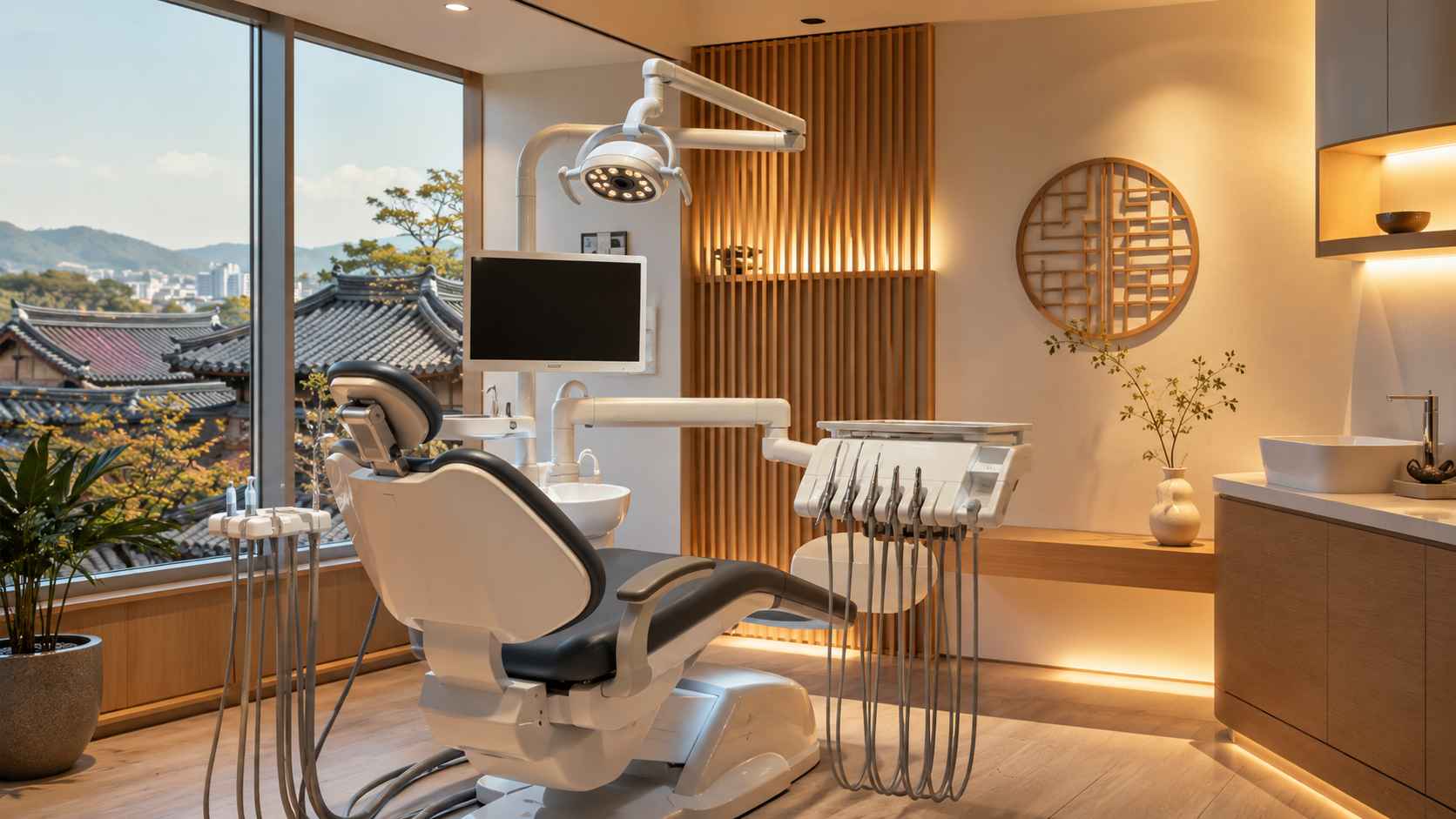
Everything Foreign Residents Need to Know About Korean Dentistry (From NHIS Coverage and Costs to Finding English-Speaking Clinics)
※ This article was first published on May 27, 2026, and last updated on May 27, 2026.
Immigration policies and visa categories may change. Always confirm updates through official government websites and certified institutions.
Cover image credit: Image generated by AI (ChatGPT, 2026). AI-generated images are strictly for editorial purposes only, comply with free commercial-use licenses (Unsplash, Pixabay, Pexels), and are not permitted for resale or standalone commercial use. Images do not depict actual people, places, or events.
Editorial & AI Assistance Notice: This article was prepared by HACKsKorea editors with AI assistance (Claude). All facts were verified against official government and institutional sources. This is general information only, not legal advice. Users must confirm the latest details through official government websites or authorized agencies. For official inquiries, please contact the Korea Immigration Service through HiKorea (Call Center 1345, multilingual support available).
This content is for informational purposes only and does not constitute medical diagnosis, treatment, or professional medical advice. Always consult qualified healthcare professionals for medical concerns. Emergency situations require immediate contact with Korean emergency services (119 for medical, 112 for police).
Summary at a Glance
Korea has quietly become one of the most appealing countries in the world for dental care. Whether you are a long-term expat resident, an English teacher settling into your first apartment in Seoul (서울), a business professional on a multi-year assignment, or even a short-term visitor who has heard about Korea’s reputation for affordable and high-quality dentistry — this country delivers on its promise. Korean dental care combines cutting-edge technology, highly trained specialists, and prices that are a fraction of what patients pay in Western countries, all within a system that is largely organized and transparent.
Yet for many foreigners, navigating the Korean dental system feels confusing at first. Which procedures does the National Health Insurance Service (국민건강보험공단) actually cover? How do you find an English-speaking dentist without relying on luck or word-of-mouth? What do implants, root canals, crowns, and routine cleanings realistically cost in 2026? And what happens when you face a dental emergency on a Saturday evening in a city where you do not speak the language?
This guide answers all of those questions in detail. Korea’s public health insurance system, the National Health Insurance Service (NHIS), covers a meaningful range of basic dental procedures for all enrolled residents, including foreigners who hold an Alien Registration Card (외국인등록증) and have resided in Korea for more than six months. Covered procedures include tooth extractions, cavity fillings, root canal therapy, and periodontal (gum) treatment, with patients typically paying a co-payment of approximately 30–50% of the treatment cost. Cosmetic and elective work — teeth whitening, orthodontic braces, ceramic veneers, and dental implants for adults under 65 — falls outside NHIS coverage and must be paid entirely out of pocket.
Even without full insurance coverage, Korean dental prices are dramatically lower than comparable care in the United States, the United Kingdom, Canada, or Australia. A single dental implant at a reputable Seoul clinic costs approximately ₩800,000–₩2,800,000 (roughly USD $580–$2,100 as of 2026), compared to USD $3,000–$6,000 for the same procedure in the United States. A routine consultation and professional scaling typically runs ₩50,000–₩150,000. A basic cavity filling with NHIS coverage can cost as little as ₩20,000–₩60,000 per tooth. This pricing, combined with Korea’s world-class dental technology — including same-day digital scanning, 3D CT imaging, and CAD/CAM crown fabrication — and a growing network of English-friendly clinics, makes Korea an exceptional destination for both routine dental maintenance and major restorative work.
The key to a smooth dental experience in Korea is preparation: knowing what NHIS covers, understanding which procedures are non-insured (비급여), choosing the right clinic for your needs, and communicating your situation clearly before treatment begins. This complete guide walks you through every step of the process, from verifying your insurance enrollment status to managing dental emergencies and claiming reimbursements from private insurers, so you can protect your oral health confidently throughout your time in Korea.
Eligibility and Conditions (Who Can Access Dental Care Under NHIS and Under What Terms)
NHIS Enrollment Requirements for Foreign Residents
Not every foreigner in Korea is automatically entitled to dental coverage under the National Health Insurance Service (NHIS). Eligibility depends primarily on your visa type, length of stay, and official registration status. Since March 2021, NHIS enrollment has been mandatory for most long-term foreign residents, meaning that if you qualify, you are legally required to enroll — and failing to do so can create complications at the time of visa renewal.
Foreign nationals who hold a valid Alien Registration Card (ARC) and have resided in Korea for more than six months are generally required to enroll in NHIS. This broad eligibility encompasses holders of employment visas (E-type series), long-term resident visas (F-type series including F-2, F-4, F-5, and F-6), student visas (D-2 and D-4), and most other long-stay visa categories. Once enrolled, your dental benefits are structurally identical to those received by Korean nationals — the same covered procedures, the same co-payment rates, and the same NHIS insurance card to present at dental clinics.
Foreigners on short-stay visas — tourist (B-2), short-term business (C-3), and similar categories — are not eligible for NHIS enrollment and must pay 100% of all dental costs out of pocket or rely on private travel insurance with dental coverage. If you are on a short stay but need dental treatment, virtually all clinics will accept direct cash or international credit card payment. However, direct billing to foreign insurance plans is uncommon in Korea, so you should expect to pay first at the clinic and then submit a reimbursement claim to your insurer afterward.
What NHIS Covers for Dental Treatment
Once enrolled, NHIS provides partial coverage for medically necessary dental procedures. This is a critical distinction that many expats miss: the Korean public insurance system is designed to protect essential oral health, not to fund cosmetic improvements or elective enhancements. The following procedures are covered, subject to a co-payment of approximately 30–50% depending on the treatment type and the classification of the clinic you attend.
Tooth extractions — both simple extractions and surgical extractions (including impacted wisdom tooth removal in many cases) are covered under NHIS. This makes extraction one of the most affordable dental services available to foreign residents enrolled in the system.
Cavity fillings — composite resin (레진) fillings on front teeth and amalgam (아말감) fillings on back molar teeth are covered under NHIS. However, ceramic or tooth-colored composite fillings on back teeth chosen purely for aesthetic reasons are generally classified as non-insured (비급여), meaning you pay extra for the cosmetic upgrade.
Root canal treatment (신경치료) — NHIS covers root canal therapy, which involves removing infected or damaged pulp tissue from the interior of a tooth to preserve it from extraction. With NHIS coverage, your out-of-pocket cost for a root canal typically ranges from ₩150,000–₩400,000 per tooth depending on which tooth is being treated; front teeth are less complex and therefore less expensive than upper back molars.
Periodontal (gum) treatment — treatment for gingivitis and periodontal disease, including professional scaling (치석제거) and deep cleaning procedures, is covered under NHIS. Adult residents aged 19 and older are entitled to one NHIS-subsidized scaling session per calendar year, with a patient co-payment of approximately ₩14,000–₩20,000 — a fraction of the ₩50,000–₩150,000 that uninsured patients pay for the same procedure.
Pit and fissure sealants — for children aged 6 to 14, NHIS covers preventive sealant applications on permanent first and second molar teeth to prevent future decay.
Expanded senior coverage — patients aged 65 and older receive significantly broader dental benefits, including partial and full denture coverage (틀니) and limited dental implant coverage (임플란트). Under the senior implant benefit, eligible patients aged 65 and older can receive partial cost coverage for up to two implants over their lifetime, with specific conditions and a co-payment rate that varies based on the patient’s income and insurance category. This benefit has made Korea’s senior implant program one of the most discussed dental insurance features in East Asia.
What NHIS Does Not Cover
A substantial portion of modern dental work falls entirely outside NHIS coverage. The following procedures are classified as non-insured (비급여) and require full out-of-pocket payment regardless of how long you have been enrolled in NHIS.
Teeth whitening — whether professional in-office laser whitening or take-home tray treatment, all whitening procedures are cosmetic and fully uninsured. Prices at reputable clinics range from approximately ₩200,000 to ₩600,000 depending on the method and the number of sessions.
Orthodontics — traditional metal braces, ceramic braces, lingual braces, and clear aligner treatments (such as Invisalign) are entirely non-covered under NHIS regardless of the patient’s age. Total orthodontic treatment costs in Korea typically range from ₩2,000,000 to ₩5,000,000 depending on complexity and clinic location, which remains considerably more affordable than comparable treatment in Western countries.
Dental implants for adults under 65 — the implant fixture, abutment, and crown are all non-covered for patients below the senior eligibility threshold. As noted above, market rates for a single implant in Seoul range from approximately ₩800,000 to ₩2,800,000 depending on the implant brand and materials used.
Ceramic and zirconia crowns — while certain basic metal alloy crowns may receive partial NHIS coverage in specific clinical scenarios, premium aesthetic crown materials including full-ceramic and zirconia crowns are generally classified as non-insured.
Gold or porcelain inlays and onlays — these custom-fabricated indirect restorations are classified as non-insured when chosen for cosmetic or comfort preferences.
Bone grafting and sinus lift procedures — preparatory surgical work required before implant placement is entirely non-covered.
Cosmetic veneers — porcelain and composite veneers designed purely to improve the appearance of teeth are fully excluded from NHIS.
Step-by-Step Guide to Getting Dental Care in Korea (외국인을 위한 치과 이용 단계별 가이드)
Step 1: Verify Your NHIS Enrollment Status (NHIS 가입 여부 확인하기)
- Estimated time: 15–30 minutes
- What you need: Alien Registration Card (ARC), a smartphone or computer, and your NHIS member number if available
- 💡 Pro Tip: Download the NHIS mobile app (건강보험 앱) and log in with your ARC number to check your enrollment status, premium payment history, and annual benefit usage in one place.
- ⚠️ Warning: If you recently moved to a new address in Korea, update your address separately with both the immigration office (출입국·외국인청) and NHIS. Failure to do so means NHIS bills go to your old address, and unpaid bills can suspend your coverage without warning.
Before booking any dental appointment, confirm that you are currently enrolled in NHIS and that your premium payments are up to date. If you have overdue premiums, your NHIS coverage will be suspended at the time of treatment, meaning you will be charged the full uninsured rate even for normally covered procedures. This is a common and entirely preventable problem for expats.
You can verify your NHIS status through three channels: the official NHIS website at nhis.or.kr, the NHIS mobile app (The Health Insurance — 건강보험), or by calling the NHIS customer service line at 1577-1000, which offers multilingual support. If you are employed by a Korean company, your employer should have enrolled you automatically when you started work; however, it is worth confirming this rather than assuming. If you are self-employed, a freelancer, or enrolled as a dependent on a spouse’s or employer’s policy, you may need to check your status independently and more carefully.
If you discover that you are not yet enrolled and you have been residing in Korea for more than six months on a qualifying long-stay visa, visit your nearest NHIS branch office (국민건강보험공단 지사) with your Alien Registration Card and passport to register. Bring your employment contract or proof of residence as supporting documentation. Enrollment typically takes effect within a few business days. Premium payments are calculated based on your income level for employed individuals or on a standardized rate for certain visa categories.
Step 2: Find a Suitable Dental Clinic (적합한 치과 찾기)
- Estimated time: 30 minutes to 1 hour for initial research
- What you need: Internet access, your location, and a clear understanding of what treatment you need
- 💡 Pro Tip: Search for clinics using Naver Map (네이버 지도) by typing “영어 치과” (English dental) plus your neighborhood name. Read Google Reviews in English — clinics where foreign patients leave reviews consistently are almost always prepared to treat international patients.
- ⚠️ Warning: Be cautious of ultra-low advertised implant prices below ₩300,000–₩500,000. These promotions sometimes involve lower-grade implant fixtures, hidden add-on fees for CT scans or bone grafts, or promotional terms that expire mid-treatment. Always confirm total all-in pricing in writing before agreeing to proceed.
Korea has an extraordinarily high density of dental clinics. In Seoul alone, there are several thousand practices ranging from small neighborhood clinics to large multi-floor dental hospitals. For expats, the challenge is not finding a dentist — it is finding the right dentist for your situation.
If you are based in Seoul, the neighborhoods most well-known for English-capable dental care include Gangnam (강남), Itaewon (이태원), Hongdae (홍대), Sinchon (신촌), and Mapo (마포). Gangnam in particular has a high concentration of premium dental clinics catering to both Korean and international patients. Many dentists in these areas have trained or done advanced coursework abroad, and English communication at reception and chairside is often readily available. Large dental hospitals such as Minish Dental Hospital in Gangnam explicitly serve international patients and offer comprehensive multilingual support.
Outside of Seoul, major cities including Busan (부산), Daegu (대구), Incheon (인천), and Gwangju (광주) all have English-capable dental clinics, though the options are more concentrated in expat-friendly neighborhoods and university districts. In smaller cities and rural areas, English-speaking dental staff are rare, and communication challenges are more significant. In these situations, using a translation app such as Papago (파파고), bringing a Korean-speaking colleague or friend, or writing down your symptoms before the visit can make a significant difference.
When evaluating a clinic, consider: whether the dentist and at least one staff member can communicate in English (or your preferred language), whether the clinic is registered with NHIS and listed in the NHIS clinic directory, whether they have experience treating foreign patients, and whether they provide a written treatment cost estimate before starting work. A transparent, patient-centered clinic will have no hesitation answering all of these questions before you even sit in the chair.
Step 3: Book Your Appointment and Prepare Your Documents (예약 및 서류 준비하기)
- Estimated time: 10–15 minutes for booking; 5 minutes to gather documents
- What you need: ARC, NHIS health insurance card (건강보험증) or your ARC number as a substitute, and prior dental records if available
- 💡 Pro Tip: When booking by phone or KakaoTalk, mention that you are a foreign resident (외국인 거주자). This allows the clinic to allocate extra consultation time, prepare an English-speaking staff member if available, and set up billing correctly from the start.
- ⚠️ Warning: Do not assume your foreign dental insurance plan will be accepted for direct billing at a Korean clinic. The overwhelming majority of dental clinics in Korea bill only through NHIS or accept direct patient payment. Plan to pay out of pocket and submit your own reimbursement claim to your foreign insurer afterward.
Most dental clinics in Korea accept appointment bookings by phone, through their website, or via KakaoTalk (카카오톡), which is Korea’s dominant messaging platform for both personal and business communication. When booking, briefly mention that you are a foreign resident — this small step can make a significant difference in how prepared the clinic is when you arrive. Some clinics will note this in their scheduling system and arrange for an English-speaking assistant to be available during your visit.
On the day of your appointment, bring your Alien Registration Card and your NHIS health insurance card (건강보험증). If you do not have a physical insurance card — or if you have lost it — your ARC number alone is sufficient for most clinics; the billing system can look up your NHIS enrollment status directly using your registration number. For new or complex treatments, bringing any previous dental X-rays, panoramic imaging, or records from a prior clinic (in Korea or abroad) can save you time and the cost of repeat diagnostic imaging.
If you are a short-term visitor without NHIS coverage, prepare to pay privately and inform the clinic of this at booking. Ask in advance whether they accept international credit cards, and request a detailed receipt formatted for insurance reimbursement — some clinics, particularly those in tourist-heavy areas, are accustomed to preparing the documentation that foreign insurers require.
Step 4: Attend Your Appointment and Communicate Clearly (진료 받고 소통하기)
- Estimated time: 30 minutes to 2 hours depending on the procedure
- What you need: Your documents, a list of current medications and known allergies, and a translation app as backup
- 💡 Pro Tip: Before the dentist begins any procedure, ask explicitly: “Is this treatment covered by NHIS (보험 적용돼요)?” and “What is the non-insured portion I will need to pay (비급여 비용이 얼마예요)?” Reputable clinics answer this question readily and without defensiveness.
- ⚠️ Warning: Never begin a non-insured treatment without a written cost estimate (진료비 예상서). Korean dental pricing for non-insured procedures such as implants, crowns, and whitening varies considerably between clinics. Getting the estimate in writing protects you from surprise charges after treatment.
At the start of your appointment, the clinic will typically take dental X-rays (엑스레이) and conduct a brief visual examination before discussing treatment options. For initial visits at a new clinic, a panoramic X-ray (파노라마) is common and provides the dentist with a comprehensive view of your entire dental and jaw structure. This is the diagnostic standard in Korea, and the cost is usually included in the consultation fee or charged at a modest additional rate.
Before any treatment begins, this is your opportunity to ask questions and clarify costs. In Korea, patients are generally expected to confirm their consent to a treatment plan before the dentist proceeds. If you are uncertain about a recommended procedure, ask for a written plan that distinguishes NHIS-covered items from non-insured items, along with the estimated cost for each. This is entirely normal and professionally standard at well-run clinics.
Communicate any medication allergies clearly — particularly to local anesthetics (such as lidocaine), antibiotics (particularly penicillin-class drugs), and non-steroidal anti-inflammatory medications (NSAIDs), as all of these are commonly used in dental procedures. If you have underlying health conditions such as diabetes, hypertension, a heart condition, or a blood clotting disorder, inform the dentist before treatment begins. These conditions can affect both the procedure itself and the medications prescribed for recovery.
If your Korean is limited, use Google Translate or Papago to communicate specific symptoms or questions. Simple phrases that are universally understood in Korean dental contexts include: “이가 아파요” (I have a toothache), “잇몸이 부어요” (my gums are swollen), “이가 부러졌어요” (my tooth is broken), and “차가운 거 먹으면 아파요” (it hurts when I eat cold food). Even at clinics without dedicated English speakers, dentists understand these physical descriptions well.
Step 5: Pay and Keep Your Receipts for Future Claims (비용 지불 및 영수증 보관하기)
- Estimated time: 10–15 minutes per visit
- What you need: Payment method (cash or credit card), and a secure folder or phone photo backup for receipts
- 💡 Pro Tip: If you are enrolled in a private supplemental dental insurance plan, photograph each dental receipt immediately after paying and upload it to your insurer’s app the same day. Many private insurers impose claim submission deadlines of 90 to 180 days from the treatment date.
- ⚠️ Warning: If your NHIS premiums are currently overdue when you visit a dental clinic, you will be charged the full uninsured rate for all procedures, including normally covered ones. After settling the overdue balance, you can apply for a retroactive NHIS reimbursement through your local NHIS branch office — but the process is slow. Staying current on premium payments is the far simpler solution.
In Korea, dental payment is expected immediately after each treatment session — not at the end of a full course of treatment. This differs from some Western healthcare models where billing follows weeks later. For NHIS-covered procedures, the clinic’s billing system will automatically calculate your co-payment based on your current insurance status, and you pay only your share at the desk before leaving. For non-insured procedures, you pay the full amount directly.
Most dental clinics in Seoul and major cities accept domestic credit and debit cards, and an increasing number of internationally oriented clinics accept major foreign credit cards. However, carrying cash (₩50,000 notes) as a backup is always prudent, particularly at smaller neighborhood clinics that may have card payment restrictions. For major procedures such as full implant restorations, some premium clinics can arrange installment payment plans — ask about this option at the treatment planning stage, not after you have already received the bill.
Keep every dental receipt in a dedicated folder or take a clear photograph of each one. Korean medical receipts are detailed documents: they itemize each procedure by its classification code (insured or non-insured), show the total cost, the NHIS subsidy applied, and the amount you actually paid. This documentation serves multiple purposes — it is required for private insurance reimbursement claims, it may qualify for Korea’s annual income tax deduction (연말정산) system for registered long-term residents, and it provides an accurate treatment record if you need follow-up care at a different clinic in the future.
Regional Differences in Dental Care Across Korea (지역별 치과 이용 환경 비교)
Seoul and the Metropolitan Area
Seoul is without question the easiest city in Korea for expats seeking dental care. The capital’s dental landscape is diverse, competitive, and highly international in orientation. In the Gangnam (강남) district — particularly the areas surrounding Gangnam Station, Sinnonhyeon Station, and the Apgujeong (압구정) neighborhood — dozens of premium dental clinics compete for both domestic and international patients. Many of these practices employ dentists who completed postgraduate training in the United States, Japan, or Europe, and patient communication in English is available at most of these clinics without prior arrangement.
Outside of Gangnam, the neighborhoods of Itaewon (이태원) and Hannam-dong (한남동) have long been expat hubs, and the dental clinics in these areas reflect that — English-speaking dentists and multilingual reception staff are more common here than almost anywhere else in the country. Hongdae (홍대) and Sinchon (신촌), anchored by major universities and large international student populations, also offer dental clinics with strong English-language capacity. Pricing in these areas reflects the market’s premium positioning: routine procedures may cost 20–40% more than the same work at a neighborhood clinic in a residential area.
Incheon (인천) — technically a separate metropolitan city but functionally connected to greater Seoul — has several reputable dental clinics in the Bupyeong (부평) and Yeonsu (연수) districts, particularly suited to the large expat community working near Incheon International Airport and the Songdo (송도) international business district.
Major Cities: Busan, Daegu, and Gwangju
Korea’s second-largest city, Busan (부산), has a well-developed dental sector with English-capable clinics primarily concentrated in the Haeundae (해운대), Seomyeon (서면), and Nampo-dong (남포동) areas. Haeundae, as the center of Busan’s international community, has the highest concentration of English-friendly dental practices. Treatment costs in Busan for non-insured procedures are generally 10–20% lower than equivalent Seoul clinics, making the city an attractive option for expats living in the region.
Daegu (대구), known as Korea’s healthcare and medical tourism hub, offers a competitive dental market with strong clinical quality. The Dongseongno (동성로) area and neighborhoods surrounding Kyungpook National University (경북대학교병원) have established dental clinics with experience treating international patients. Gwangju (광주) in the southwest has a smaller international community but a reputable hospital-affiliated dental sector centered around Chonnam National University (전남대학교) and the local government medical district.
Smaller Cities and Rural Areas
Expats living in smaller cities, provincial towns, or rural areas of Korea will find that dental care options, while present, require more effort to navigate as a foreigner. English-speaking dental staff are uncommon outside of major urban centers. In these settings, the recommended strategies are: using a translation app (Papago or Google Translate) for real-time communication, preparing a written description of your symptoms in Korean before the appointment, or asking a Korean colleague or friend to accompany you for language support. University towns — such as Jeonju (전주), Chuncheon (춘천), Jinju (진주), and Changwon (창원) — tend to have above-average dental options relative to their size due to the presence of medical or healthcare-related educational institutions.
Real-Life Case Examples
Case 1: Marcus and His First NHIS Dental Visit
(The following is a fictionalized scenario created for educational purposes. It does not describe any real person, event, or case.)
Marcus, a 31-year-old American English teacher from Ohio, arrived in Korea on an E-2 visa and began working at a private language institute in Suwon (수원). Within two months of his arrival, his employer enrolled him in NHIS, and Marcus received his health insurance card in the mail. Several months later, he noticed mild pain in one of his upper molar teeth and decided to visit a dental clinic near his apartment.
At the clinic, the receptionist asked for his ARC and insurance card, ran his details through the NHIS billing system, and confirmed his active enrollment. The dentist took a panoramic X-ray and identified a moderate cavity that required a composite resin filling. Before proceeding, the assistant explained in basic English that the filling would be NHIS-covered since it was on a front molar position, and the co-payment would be approximately ₩28,000.
The procedure took about 40 minutes, including numbing and waiting time. Marcus paid ₩28,000 at the desk afterward and received an itemized receipt. He was surprised at how efficient and pain-free the whole experience had been — and how much cheaper it was compared to his experiences at dental offices back home, where the same procedure would have cost several hundred dollars even with private insurance.
Key Lesson: NHIS coverage works seamlessly at most registered dental clinics in Korea. Simply presenting your ARC and insurance information at reception is enough to access your benefits.
Case 2: Sophie and an Unexpected Root Canal
(The following is a fictionalized scenario created for educational purposes. It does not describe any real person, event, or case.)
Sophie, a 34-year-old French expat working as a marketing consultant in Seoul on an F-2 visa, had been experiencing intermittent tooth pain for several weeks before the pain suddenly intensified on a Friday evening. She used Naver Map to search for “치과” near Hongdae and found a clinic that had Google Reviews from foreign patients and explicitly listed English support on its profile page.
At the clinic, the dentist quickly identified a severely infected tooth requiring root canal treatment. Sophie was concerned about cost, so she asked for a written estimate before the dentist began. The clinic staff explained that the root canal procedure would be partially covered by NHIS, with an estimated patient co-payment of approximately ₩180,000 for the initial session, with one or two additional sessions likely needed to complete the treatment. A temporary crown placement would follow, and the final crown — if she chose a ceramic option — would be non-insured and priced at approximately ₩350,000–₩450,000.
Sophie agreed to proceed with the NHIS-covered root canal work and opted to discuss crown options at a follow-up appointment. The total treatment across three sessions cost her approximately ₩520,000, including the ceramic crown she ultimately chose. She later submitted the itemized receipts to her supplemental private insurance policy and received a partial reimbursement for the non-insured crown cost.
Key Lesson: Always ask for a written cost estimate before agreeing to treatment. Understanding the NHIS-covered versus non-insured portions of a treatment plan allows you to make informed decisions about material upgrades and plan your budget accordingly.
Case 3: Ahmed and the Annual Scaling Benefit
(The following is a fictionalized scenario created for educational purposes. It does not describe any real person, event, or case.)
Ahmed, a 27-year-old Pakistani graduate student studying engineering at a university in Daejeon (대전), had never used his NHIS dental benefits since enrolling as a D-2 student visa holder. When a Korean classmate mentioned that NHIS covers one professional scaling session per year for adults aged 19 and older, Ahmed was surprised — he had been paying the full uninsured rate of ₩80,000 at a clinic near campus for his annual cleanings.
On his next visit, Ahmed presented his ARC and specifically asked the receptionist: “스케일링 보험 적용 되나요?” (Is scaling covered by insurance?). The billing staff confirmed that since he had not used his annual NHIS scaling benefit yet that calendar year, the co-payment would be only ₩15,000. The procedure included ultrasonic scaling and a basic polishing, and Ahmed was in and out of the clinic in under 45 minutes.
He later shared this information with several other international students in his program who had all been unknowingly paying full price for a benefit they were already entitled to under NHIS.
Key Lesson: If you are an NHIS-enrolled adult aged 19 or older, you are entitled to one subsidized professional scaling per calendar year. Always explicitly ask whether your annual scaling benefit has been applied.
Case 4: Jennifer and Senior Dental Implant Coverage
(The following is a fictionalized scenario created for educational purposes. It does not describe any real person, event, or case.)
Jennifer, a 67-year-old Canadian woman living in Busan with her Korean-born husband on an F-6 visa, had been putting off replacing a missing lower molar for over two years, assuming implant costs would be prohibitive. At a routine dental check-up, her dentist in Haeundae mentioned that as a patient aged 65 and older enrolled in NHIS, she was eligible for partial insurance coverage for up to two dental implants under the senior implant benefit.
Jennifer visited the NHIS branch office with her husband’s assistance to confirm her eligibility and understand the cost-sharing terms. She learned that under the senior implant benefit, NHIS would cover approximately 70% of the procedure cost for the eligible implant, with her co-payment covering the remaining 30%. The final out-of-pocket cost for the implant, including all preparatory imaging and the crown placement, was approximately ₩520,000 — a fraction of what the same treatment would have cost either in Canada or at full private rates in Korea.
The treatment was completed across four clinic visits over approximately five months, allowing time for osseointegration (the process by which the titanium implant fuses with the jawbone) before the final crown was placed.
Key Lesson: NHIS-enrolled patients aged 65 and older receive meaningful dental implant coverage. Confirm your eligibility with your NHIS branch and ask your dentist to apply the senior implant benefit before treatment begins.
Case 5: Yuki and the True Cost of Orthodontics
(The following is a fictionalized scenario created for educational purposes. It does not describe any real person, event, or case.)
Yuki, a 29-year-old Japanese expat working as a product designer at a technology firm in Seoul on an E-7 visa, had been self-conscious about her crowded lower teeth for years and decided that her time in Korea — known for competitive orthodontic pricing — was the ideal opportunity to finally get braces. After researching clinics online and visiting two consultations, she selected a specialist orthodontist in the Sinchon area.
During the consultation, Yuki confirmed what she had read online: orthodontic treatment is entirely non-covered by NHIS, regardless of the patient’s age or the clinical necessity of the treatment. The total treatment plan using standard ceramic braces was quoted at ₩3,200,000 for approximately 20–24 months of active treatment, payable in monthly installments of ₩120,000–₩150,000. Clear aligner treatment (Invisalign) was quoted at ₩4,500,000 for comparable cases.
Yuki chose the ceramic brace option, noting that the cost was still considerably lower than equivalent orthodontic fees she had been quoted in Tokyo. She appreciated that the clinic provided an English translation of her treatment contract and maintained consistent follow-up communication in English throughout her treatment course.
Key Lesson: Orthodontic treatment is 100% non-insured under NHIS. Get a complete written treatment plan including payment terms before committing. While costs are higher than insured dental work, Korean orthodontic pricing is significantly more affordable than in most Western countries.
Case 6: Thomas and a Dental Emergency as a Visitor
(The following is a fictionalized scenario created for educational purposes. It does not describe any real person, event, or case.)
Thomas, a 42-year-old British national visiting Seoul for a ten-day business trip, cracked a tooth on a hard piece of food on his third evening in the city. With no NHIS coverage as a short-term visitor, Thomas was concerned about how to access emergency dental care and what it would cost.
A search on Google led him to a Gangnam dental clinic that explicitly marketed itself to international visitors, listed English-speaking staff, and offered emergency same-day appointments. The clinic’s front desk confirmed by email that they accepted major international credit cards and could provide detailed receipts in English for international insurance reimbursement.
The dentist assessed the crack, took an X-ray, and determined that the tooth required a temporary crown to protect it during Thomas’s remaining time in Korea. The full cost — including the emergency consultation, X-ray, and temporary crown — was ₩280,000 (approximately GBP 170 at the time). The clinic provided a detailed English-language receipt summarizing the treatment codes, procedure descriptions, and total charges. Thomas submitted the receipt to his UK private dental insurer upon returning home and received partial reimbursement under his policy’s overseas dental emergency clause.
Key Lesson: Even without NHIS, visiting Korea for dental care or managing a dental emergency is straightforward at internationally oriented clinics. Always bring travel insurance that includes overseas dental emergency coverage, and confirm your insurer’s reimbursement process before traveling.
Case 7: Ana and the Non-Insured Whitening Decision
(The following is a fictionalized scenario created for educational purposes. It does not describe any real person, event, or case.)
Ana, a 26-year-old Brazilian English teacher working on an E-2 visa in Incheon, wanted to get professional teeth whitening before attending a friend’s wedding. She visited a dental clinic near her apartment and asked whether teeth whitening was covered by NHIS.
The dental assistant politely explained that teeth whitening — like all cosmetic dental procedures — is fully non-insured under NHIS, meaning the total cost would be Ana’s responsibility regardless of her insurance status. The in-office laser whitening treatment at this clinic was quoted at ₩380,000 for a single session. The assistant also mentioned a take-home tray option at ₩180,000, including custom trays and three weeks of whitening gel.
Ana asked whether the clinic could recommend a reputable clinic in Gangnam that specialized in cosmetic dentistry for a more comprehensive whitening result. The dentist suggested she research clinics that offer combination in-office and take-home packages, which typically deliver better and longer-lasting results than either method alone. Ana eventually chose a Gangnam clinic that offered a combination package for ₩520,000 and was very satisfied with the outcome.
Key Lesson: Teeth whitening and all cosmetic dental procedures are 100% non-insured in Korea. Before committing, compare at least two or three clinics on treatment approach, materials used, and total cost — not price alone. Results and longevity vary considerably between providers.
Frequently Asked Questions
1. Does NHIS cover dental care for foreigners enrolled in the system?
Yes — once you are enrolled in Korea’s National Health Insurance Service (국민건강보험공단), your dental coverage is equivalent to that received by Korean nationals. This is one of the most important things foreign residents should understand about the Korean healthcare system: NHIS does not discriminate between citizens and registered foreign residents when applying dental benefits. The coverage threshold, co-payment rates, and eligible procedures are identical.
In practical terms, this means that if you are an enrolled NHIS member visiting a registered dental clinic in Korea, you will pay only the patient co-payment (typically 30–50% of the procedure cost) for covered treatments such as tooth extractions, cavity fillings, root canal therapy, gum treatment, and the annual professional scaling benefit. The NHIS system handles the remainder automatically through the clinic’s billing system.
However, it is important to remember that enrollment is not automatic — you must be on a qualifying long-stay visa, have resided in Korea for more than six months, and have your enrollment confirmed through the NHIS system. Foreigners on tourist visas or short-stay categories are not eligible for NHIS and must pay the full uninsured rate for all dental treatment. Additionally, if your NHIS premium payments are overdue at the time of your clinic visit, your coverage will be temporarily suspended. Always verify your enrollment and payment status through the NHIS website or customer service line at 1577-1000 before attending your appointment.
2. How do I find an English-speaking dentist in Korea?
Finding an English-speaking dentist in Korea is significantly easier than many expats expect, particularly in Seoul and major cities. The most reliable strategies combine online research with verification before booking.
Start with Google Maps or Naver Map (네이버 지도) using search terms like “English dentist Seoul,” “영어 치과 강남,” or your neighborhood combined with the term “치과” (dental clinic). Clinics that have accumulated English-language Google reviews from foreign patients are almost always accustomed to treating international patients. Pay attention to whether the reviews specifically mention communication — “the dentist spoke excellent English,” “the staff explained everything clearly in English” — as this gives you the most reliable signal of genuine English capability rather than a simple marketing claim.
In Seoul, the following neighborhoods have the highest concentration of English-capable dental clinics: Gangnam (강남), Itaewon (이태원), Hannam-dong (한남동), Hongdae (홍대), Sinchon (신촌), and Yongsan (용산). In Busan, Haeundae (해운대) and Seomyeon (서면) are your best starting points. Many internationally oriented clinics also maintain websites in English, operate English-language KakaoTalk accounts for appointment booking, and may be listed on platforms such as ZocDoc Korea or the NHIS clinic search tool.
When in doubt, call the clinic before booking and ask simply: “Do you have English-speaking staff?” (영어 하는 직원 있어요?). The answer will immediately clarify whether English communication is genuinely available or limited to basic reception phrases.
3. How much does a routine dental check-up and cleaning cost in Korea?
The cost of a routine dental check-up and professional cleaning in Korea varies depending on whether you are enrolled in NHIS, the type of clinic, and your location. Understanding the difference between insured and non-insured pricing is essential for budgeting dental maintenance during your time in Korea.
For NHIS-enrolled adults aged 19 and older, the most significant annual benefit is the subsidized professional scaling (치석제거). Once per calendar year, you are entitled to a professional scaling session at an NHIS-registered clinic with a co-payment of approximately ₩14,000–₩20,000. This benefit applies to all enrolled adults regardless of nationality. A routine dental examination (진찰) may carry a small additional consultation fee of ₩5,000–₩20,000, though some clinics include this in the scaling visit. Dental X-rays, if taken, may incur a small additional charge depending on the type and number of images.
For uninsured patients — including those on short-stay visas or those whose NHIS enrollment is not active — a full check-up, X-rays, and professional cleaning at a private rate typically costs ₩50,000–₩150,000 at a standard neighborhood clinic, and up to ₩200,000 or more at premium international-oriented practices in Gangnam. By comparison, the same services cost USD $150–$350 in the United States, GBP 70–200 in the United Kingdom, and AUD $200–$400 in Australia, making Korean dental check-ups extremely affordable even at full private rates.
4. Is teeth whitening covered by NHIS in Korea?
No — teeth whitening is not covered by NHIS under any circumstances. This is a common question among foreign residents who have just enrolled in NHIS and assume that dental coverage is comprehensive. The Korean public health insurance system is specifically designed to cover medically necessary dental procedures, and aesthetic treatments — regardless of the strength of your personal motivation for seeking them — fall entirely outside that framework.
At a practical level, this means that whether you have been enrolled in NHIS for five years or five weeks, any teeth whitening procedure you undergo in Korea will be billed at full private rates with no insurance subsidy whatsoever. Typical prices for professional in-office whitening range from approximately ₩200,000 to ₩600,000 per session depending on the technology used (LED, laser, or standard bleaching tray), the clinic’s location, and the brand of whitening agent applied. Take-home tray whitening kits with custom-fitted trays typically cost ₩150,000–₩250,000.
Combination in-office and take-home programs, which tend to deliver the best and most durable results, are priced at approximately ₩400,000–₩700,000 at reputable clinics. These programs typically include an in-clinic session to jump-start the whitening process, followed by two to three weeks of daily home tray use to consolidate the results.
When choosing a whitening clinic, look for one that conducts a preliminary oral health assessment before proceeding. Whitening on teeth with untreated cavities, cracked enamel, or gum disease can worsen existing conditions. A responsible clinic will always check for these contraindications before beginning any cosmetic procedure.
5. What is the cost of a dental implant in Korea?
Dental implant pricing in Korea is one of the primary reasons the country has become a destination not only for expatriate residents but also for international dental tourists. The cost of a single dental implant in Korea is dramatically lower than in most Western countries, and the clinical quality is generally excellent.
For patients without NHIS senior implant coverage (i.e., adults under 65), a single dental implant in Korea — including the titanium fixture, the abutment, and the final crown — is priced at approximately ₩800,000–₩2,800,000 (roughly USD $580–$2,100 as of 2026) depending on the implant brand, the materials used for the crown, the complexity of the case (whether bone grafting or a sinus lift is required), and the clinic’s location and reputation. For context, the same procedure in the United States typically costs USD $3,000–$6,000, and in Australia AUD $3,500–$5,500.
Premium Gangnam clinics using top international implant brands such as Straumann or Nobel Biocare may charge toward the upper end of the Korean price range. Clinics using high-quality Korean-manufactured implant systems — such as Osstem or Dentium, both internationally recognized and widely used globally — often price their implants at the more affordable end of the scale without significant compromise in clinical outcomes.
For NHIS-enrolled patients aged 65 or older, the senior implant benefit reduces the patient co-payment to approximately 30% of the NHIS-determined standard procedure cost, making implant treatment far more accessible for older expat residents.
6. Can I use my home country’s dental insurance at a Korean clinic?
In most cases, no — not for direct billing. This is one of the most common misconceptions among newly arrived expats. Korean dental clinics are set up to process payments through the NHIS billing system (for enrolled residents) or to accept direct payment from patients. They are generally not connected to foreign insurance networks, do not have billing relationships with overseas insurers, and cannot process foreign insurance claims at the point of service.
What this means practically is that if you have private dental insurance from the United States, the United Kingdom, Canada, Australia, or another country, you will almost certainly be required to pay for your Korean dental treatment out of pocket at the clinic and then submit a reimbursement claim to your foreign insurer after returning home. Most international dental plans do cover overseas dental emergencies and sometimes routine care, but the reimbursement process is your responsibility.
To facilitate a successful reimbursement claim, request an itemized receipt (진료비 영수증) from the clinic after every session. The receipt should clearly list: the date of treatment, each procedure performed, the procedure code or classification, the total charged amount, and the amount you paid. Some internationally oriented clinics in Korea — particularly those in tourist-heavy areas or expat districts — are experienced with preparing this documentation and may offer additional help translating the receipt or summarizing the treatment in English for your insurer.
Before arriving in Korea, review your private dental insurance policy’s international coverage terms carefully, noting any geographic exclusions, annual benefit limits, submission deadlines, and documentation requirements.
7. How does the annual dental scaling benefit work under NHIS?
The annual dental scaling benefit is one of NHIS’s most valuable and most underutilized dental benefits among foreign residents in Korea. Every adult Korean resident aged 19 and older who is enrolled in NHIS is entitled to one professional scaling session per calendar year at a subsidized rate. The patient’s co-payment for this benefit is typically ₩14,000–₩20,000 — a considerable reduction from the full private rate of ₩50,000–₩150,000 that uninsured patients pay for the same procedure.
The benefit resets at the start of each calendar year (January 1). This means that if you received NHIS-covered scaling in November and then receive scaling again in January of the following year, both sessions count as separate annual benefits. However, if you attempt to use the benefit twice within the same calendar year, the second session will be billed at the full uninsured rate.
To access the benefit, simply present your ARC and NHIS card (or your registration number) at any NHIS-registered dental clinic and ask whether your annual scaling benefit has been used. The clinic’s billing system will verify this instantly. If the benefit is available, the scaling is performed and you pay only the co-payment at the desk. There is no separate application process, waiting period, or referral required for this specific benefit.
Many expats in Korea pay full price for scaling because they are unaware the benefit exists, or because they do not know to specifically ask for it to be applied. Always ask explicitly: “스케일링 보험 적용 되나요?” (Is scaling covered by insurance today?)
8. What should I do in a dental emergency in Korea?
Dental emergencies — sudden severe toothache, a cracked or broken tooth, a knocked-out tooth, severe swelling, or bleeding that does not stop — require prompt attention. Korea has several resources available to help expats navigate these situations effectively, even in the middle of the night or on a public holiday.
For the most urgent situations involving severe swelling, signs of infection spreading to the face or neck, or significant trauma to the mouth, go directly to the emergency department of a major hospital. University hospitals throughout Korea — including Seoul National University Hospital (서울대학교병원), Severance Hospital (세브란스병원) in Seoul, and their regional equivalents — have dental emergency services available. In a medical emergency, call 119 for an ambulance.
For urgent but non-life-threatening dental situations — severe toothache, a broken tooth causing pain, a lost filling — the best approach is to search for “24시 치과” (24-hour dental clinic) or “야간 치과” (night dental clinic) on Naver Map. Several cities, particularly Seoul and Busan, have dental clinics that operate late evenings and on weekends for exactly these situations. You can also call 119 and ask for the nearest available dental clinic, or dial 1339 (Korea’s health information hotline, which provides multilingual support) for guidance on where to seek urgent dental care.
For a knocked-out adult tooth, keep the tooth moist by placing it gently back in the socket, or storing it in a clean container with milk or saliva, and get to a dental clinic as quickly as possible — ideally within 30 to 60 minutes. Do not scrub the tooth root.
9. Are orthodontic braces covered by NHIS in Korea?
No — orthodontic treatment in Korea is entirely non-covered by NHIS regardless of the patient’s age, the clinical justification, or the type of appliance used. This applies to traditional metal braces, ceramic braces, lingual (behind-the-tooth) braces, and all clear aligner systems including Invisalign. The classification of orthodontics as cosmetic or elective — rather than medically necessary — is the basis for its exclusion from the public insurance framework.
However, it is worth noting that Korea is one of the most affordable countries in the world for orthodontic treatment when compared to Western market rates. The full cost of a conventional orthodontic treatment course in Korea typically ranges from ₩2,000,000 to ₩3,500,000 for standard metal braces, ₩2,500,000 to ₩4,500,000 for ceramic braces, and ₩4,000,000 to ₩6,000,000 for clear aligner systems. These figures compare favorably with orthodontic costs in the United States, where treatment routinely runs USD $4,000–$8,000 for comparable cases.
When evaluating orthodontic clinics in Korea as a foreign resident, prioritize clinics that: have dedicated orthodontic specialists (치과교정과 전문의) rather than general dentists performing braces as an additional service, provide a full treatment plan in writing before you commit, are transparent about what the quoted price includes (retainers, emergency adjustments, and follow-up visits), and can communicate effectively in your language throughout what will be a multi-year course of treatment.
10. How do I communicate with a Korean dentist if I do not speak Korean?
Language barriers are one of the most common concerns expats raise about accessing dental care in Korea, but the practical reality is far more manageable than many people expect. There are several strategies that work well across different situations and clinic types.
The most reliable first step is to choose a clinic that is already known for English-language capability. As described in Step 2 of this guide, targeting clinics in expat-heavy neighborhoods or those with strong English-language Google Reviews reduces the language barrier significantly before you even enter the door.
If you are attending a clinic without dedicated English-speaking staff, digital translation tools are your most effective solution. Papago (파파고), developed by Naver, is the gold standard for Korean-English translation in Korea — it handles medical and dental vocabulary more accurately than generic translation tools and supports real-time camera translation for reading signs and documents. Google Translate also works well and supports a live conversation mode where both parties can speak and receive translated responses in real time.
Prepare in advance by writing down your key symptoms and dental history in simple, clear English, then run those sentences through Papago before your appointment to generate the Korean text you can show the dentist or receptionist. Alternatively, many online resources and expat community forums (including groups on Facebook and Reddit’s r/korea community) have compiled lists of common Korean dental vocabulary and phrases that are worth reviewing before your visit.
11. Is dental tourism a good option for people visiting Korea specifically for treatment?
Korea has become a recognized destination for dental tourism, particularly among patients from countries where dental care is extremely expensive — the United States, Canada, Australia, and parts of Western Europe. The combination of internationally trained dentists, state-of-the-art equipment, shorter waiting times than public health systems in many countries, and prices that remain significantly lower even after factoring in travel costs makes Korea a genuinely compelling option for certain major dental procedures.
Dental tourism to Korea makes the most practical sense for high-cost procedures such as full-mouth implant restorations (All-on-4 or All-on-6 systems), extensive cosmetic makeovers involving multiple crowns or veneers, and complex orthodontic cases. For a patient from the United States needing four implants — a cost of USD $12,000–$24,000 at home — the same treatment in Seoul might cost USD $4,000–$8,000, producing substantial net savings even after international flights and accommodations.
However, dental tourism comes with genuine logistical considerations that potential visitors should understand before committing. Many major dental procedures require multiple visits spaced weeks or months apart. A single dental implant, for example, involves implant placement followed by an osseointegration period of three to six months before the final crown can be placed. This either requires planning two separate trips to Korea or extending your stay. Some clinics offer temporary crown options that allow you to leave Korea with a functional restoration and return for the permanent crown later.
Research clinics thoroughly before traveling. Look for clinics with a dedicated international patient coordinator, verifiable credentials for the treating dentist, clear written quotes in your currency, and a defined aftercare protocol for complications that might arise after you return home.
12. What is the difference between NHIS-covered and non-insured dental treatment in Korea?
Understanding the difference between NHIS-covered (급여) and non-insured (비급여) dental treatment is fundamental to managing your dental costs effectively in Korea. This distinction determines not just how much you pay, but also the materials used, the treatment options presented, and how you interpret the itemized receipt you receive after your visit.
NHIS-covered (급여) treatments are procedures that the Korean government has determined to be medically necessary and included in the public insurance benefit schedule. For these procedures, the government negotiates a standardized rate directly with dental clinics, and enrolled patients pay only the designated co-payment (approximately 30–50%). The clinic is legally required to bill NHIS at the government-regulated rate — they cannot charge more or less than the official schedule price for covered procedures.
Non-insured (비급여) treatments, by contrast, are procedures that fall outside the NHIS benefit schedule — either because they are classified as cosmetic, elective, or because no standardized rate has been determined. For these treatments, the clinic sets its own pricing, and the patient pays 100% of the cost. There is no price cap on non-insured procedures, which is why prices for services like implants, whitening, and orthodontics can vary substantially between clinics.
In practice, many dental treatment plans involve a mix of both categories. For example, a tooth that needs a root canal (covered by NHIS) and then a crown may involve NHIS coverage for the root canal procedure itself, but the crown may be non-insured if a ceramic or zirconia material is chosen. The clinic’s billing staff should clearly distinguish these categories on your invoice.
13. Can I get dental X-rays in Korea, and are they covered by NHIS?
Dental X-rays are routinely taken at Korean dental clinics as part of the diagnostic process, and they are generally included in or closely associated with the initial consultation. Whether they are covered by NHIS depends on the type of X-ray and the clinical context in which it is taken.
Standard periapical (small, targeted) X-rays taken during a diagnostic examination are typically covered or included in the consultation fee at most clinics. Panoramic X-rays (파노라마), which provide a full view of all teeth, jaws, and surrounding structures, are a standard first-step diagnostic tool in Korea and are usually included in the consultation cost or charged at a modest rate (approximately ₩5,000–₩20,000) as part of an NHIS-covered examination.
Three-dimensional CT scans (3D CT), which provide detailed volumetric imaging of bone density and anatomy — primarily used for implant planning — are generally classified as non-insured and priced separately at approximately ₩30,000–₩100,000 depending on the clinic and the scope of the scan. Patients planning implant surgery should expect this as an additional cost beyond the implant procedure itself.
Korea’s dental imaging technology is generally excellent and up-to-date. Most established clinics — not just premium Gangnam practices — operate digital X-ray equipment that delivers lower radiation exposure than older analog systems and provides instant high-resolution images that the dentist can review with you during the consultation.
14. How long does dental treatment typically take in Korea?
The duration of dental treatment in Korea depends entirely on the type and complexity of the procedure. For routine work, Korea’s dental system is known for relatively efficient turnaround times compared to dental systems in many Western countries, where specialist wait times can stretch for months.
Routine procedures — a consultation and X-ray, a simple cavity filling, a professional scaling session — typically take between 30 and 60 minutes and are completed in a single visit. Root canal treatment, depending on which tooth is affected and the severity of the infection, typically requires two to three sessions spaced one to two weeks apart, each lasting approximately 45 to 90 minutes. The full root canal treatment course, including the final crown placement, is usually completed within four to six weeks.
Dental implants have the longest treatment timeline of any common dental procedure. After the implant fixture is surgically placed in the jawbone, a healing and osseointegration period of three to six months is required before the bone has sufficiently fused with the titanium implant to support a permanent crown. During this period, a temporary restoration is often placed. The total treatment timeline from initial consultation to final crown placement is typically five to eight months for a straightforward single implant case.
Orthodontic treatment — whether braces or clear aligners — follows a similar timeline to orthodontic treatment in other countries: typically 18 to 30 months of active treatment depending on the complexity of the case, followed by a retention phase using fixed or removable retainers.
15. Are dental treatments for children covered differently under NHIS?
Yes — NHIS provides certain pediatric-specific dental benefits that are distinct from adult coverage, and these benefits are available to enrolled foreign residents’ children just as they are for Korean children.
The most significant pediatric-specific dental benefit is the pit and fissure sealant program. For children aged 6 to 14, NHIS covers the preventive application of dental sealants on first and second permanent molar teeth. These sealants physically block the deep grooves in the tooth surface where bacteria accumulate and cavities typically begin, providing meaningful long-term protection against childhood dental decay. This is a preventive benefit that parents of children in this age range should actively take advantage of.
For younger children (under 6), Korean dentists can also apply fluoride varnish treatments, though the insurance classification of these depends on the specific clinical documentation. Dental examinations and basic restorative treatment (fillings, extractions) for children follow the same NHIS coverage framework as for adults, with a co-payment of approximately 30–50% for covered procedures.
Parents should note that children who are enrolled as dependents on a parent’s NHIS policy receive full NHIS benefits. If your child has an Alien Registration Card, their NHIS enrollment is linked to your policy. Confirm with your NHIS branch or customer service that your children are correctly listed as dependents on your policy to ensure their coverage is active when needed.
16. What private dental insurance options are available for expats in Korea?
Given that NHIS dental coverage is limited primarily to medically necessary basic procedures, many expats in Korea find value in supplementing their public coverage with private dental insurance — particularly for cosmetic work, orthodontics, and implant coverage for adults under 65.
Several categories of private dental insurance are available to expats in Korea. Korean domestic private insurers including Samsung Life (삼성생명), Kyobo Life (교보생명), Hanwha Life (한화생명), and DB Insurance (DB손해보험) offer supplemental dental riders that can be attached to existing life or health insurance policies. These domestic plans are priced affordably but may have limitations on coverage amounts and often require Korean-language communication with the insurer.
International insurers with Korea-compatible plans include Cigna Global, AXA, Aetna, and BUPA International. These plans are designed for globally mobile individuals and typically offer broader dental coverage including orthodontics, implants, and cosmetic procedures, though premiums are correspondingly higher (often starting at USD $50–$150 per month for dental-focused coverage depending on age and deductible). The significant advantage of international plans is the ability to submit claims in English and, in some cases, access reimbursement for dental work performed in multiple countries.
When evaluating supplemental dental insurance, pay attention to waiting periods (many policies impose a 3–12 month waiting period before dental benefits activate), annual benefit limits (particularly for major restorative work), coverage percentages for different procedure categories, and whether the plan covers pre-existing dental conditions.
17. Is the quality of dental care in Korea comparable to Western standards?
Yes — Korea’s dental sector is internationally recognized for its high clinical standards, and in several respects it exceeds the equipment and technology levels common in many Western dental practices. Korean dentists undergo a six-year undergraduate dental program followed by national licensing examinations, and specialists in areas such as orthodontics, periodontics, oral surgery, and prosthodontics complete additional years of postgraduate training and certification.
Korea is also a significant manufacturer and exporter of dental technology and materials. Korean-made implant systems such as Osstem and Dentium are used by dental professionals in over 80 countries globally, and Korean dental laboratories are renowned for the precision of their crown and prosthetic fabrication. Many Korean dental clinics — particularly in Seoul — operate in-house digital laboratories equipped with CAD/CAM milling machines that can fabricate same-day ceramic crowns, significantly reducing treatment time compared to traditional laboratory workflows.
From a patient experience perspective, Korean dental clinics tend to be exceptionally well-organized, punctual with appointment times (a notable contrast with some Western healthcare systems where waiting room delays are common), and attentive to patient comfort during procedures. Pain management is taken seriously: local anesthetics are used liberally, and patients are encouraged to signal any discomfort during treatment.
The primary area where some expats note adjustment is communication — not clinical quality. In clinics without English-speaking staff, the inability to communicate fully can create a sense of uncertainty even when the treatment itself is proceeding perfectly. Selecting an English-capable clinic is the most effective way to address this concern.
18. Do I need a referral to see a dental specialist in Korea?
Generally, no — you do not need a formal referral to access dental specialist care in Korea. Unlike the hierarchical referral systems common in some Western healthcare frameworks (notably the UK’s NHS, where patients typically start with a general dentist before being referred to a specialist), Korea’s dental system allows patients to book directly with specialist clinics for orthodontics, oral surgery, periodontics, and other specialty areas.
However, there are some practical nuances worth understanding. First, for NHIS coverage purposes, certain complex procedures may attract a higher co-payment if performed at a large hospital versus a local dental clinic. NHIS’s cost-sharing rules apply a “grade” to medical institutions — large general hospitals, general hospitals, hospitals, and clinics — with patients paying progressively higher co-payments for using higher-level institutions without a referral for routine matters.
Second, while direct specialist access is common in the private dental sector, if you are receiving treatment through a university hospital dental department (which often has shorter wait times for complex procedures and competitive pricing), a referral letter from your primary dentist may be requested as part of the intake process.
For most expats, the most practical approach is to begin at a well-equipped general dental clinic, have your initial X-rays and examination completed, and then ask the dentist to refer you to a specific specialist if a complex case is identified. Many multi-specialty dental clinics in Korea handle orthodontics, oral surgery, and implant dentistry under one roof, eliminating the need for specialist referrals in routine cases.
19. Can short-term visitors access dental care in Korea?
Yes — dental care in Korea is accessible to visitors of all visa types and nationalities, including those on short-stay tourist visas with no NHIS coverage. The difference is simply that short-term visitors pay 100% of all procedure costs out of pocket, since NHIS benefits apply only to enrolled long-term residents.
In practical terms, Korea’s private-rate dental pricing is so competitive that even short-term visitors — particularly those from countries with expensive domestic dental care — can find it worthwhile to schedule dental treatment during their time in Korea. A visitor from the United States needing a crown, for example, might pay ₩400,000–₩800,000 at a Korean private clinic, compared to USD $1,500–$3,000 at home.
For short-term visitors, international clinics in Seoul’s major tourist and expat areas are the most accommodating option. These clinics are accustomed to working with patients on tight timelines, can perform same-day or next-day treatments for many common procedures, and can provide documentation formatted for foreign insurance reimbursement. Clinics near major tourist hubs — Myeongdong (명동), Insadong (인사동), and around major international hotels — often have multilingual staff.
Short-term visitors should ensure their travel insurance includes dental emergency coverage and understand the reimbursement process before departing for Korea. Keep all clinic receipts and ensure they are itemized clearly in a format your insurer will accept.
20. How do I claim dental expenses for reimbursement in Korea?
Whether you are seeking reimbursement from a private supplemental insurer, claiming through your home country’s dental plan, or applying for a tax deduction on medical expenses in Korea, the process begins with one essential step: keeping complete, itemized receipts for every dental visit.
At every dental clinic visit in Korea, request a 진료비 영수증 (medical expense receipt) and a 진료비 세부산정내역서 (detailed cost breakdown) before leaving. The detailed breakdown document itemizes each procedure, its insurance classification (NHIS-covered or non-insured), the standard rate, the NHIS subsidy applied, and your actual out-of-pocket payment. This document is the most important piece of paperwork for any reimbursement claim.
For private insurance reimbursement: Submit your claim to your insurer as soon as possible after treatment. Most insurers require claims to be submitted within 90–180 days of the treatment date. Attach the itemized receipt, a brief description of the treatment in your insurer’s required format, and any additional documentation the insurer requests. Some international insurers have smartphone apps through which you can photograph and submit receipts directly.
For Korea’s annual income tax deduction (연말정산): Long-term foreign residents who file Korean income taxes can claim qualified medical expenses, including dental expenses, as deductions during the annual tax settlement period in February. Medical expenses that exceed 3% of your total annual income can be partially deducted. Your employer’s HR department will typically guide you through this process, or you can file independently through the National Tax Service (국세청) website at hometax.go.kr.
Keep all dental receipts organized by year in a dedicated folder, physical or digital, so that you can access them easily when needed.
Cultural Tips and Common Mistakes
Cultural Tips
💡 Ask before you assume. Korean dental culture is highly service-oriented, and clinic staff are generally happy to explain exactly what each procedure costs, whether it is insured, and what alternatives exist. The cultural norm is for patients to accept the dentist’s recommendations without extensive questioning — but as a foreign patient, you are fully entitled to ask for written cost breakdowns and treatment alternatives before consenting.
💡 Multiple sessions are normal. Unlike some Western dental practices that try to complete as much work as possible in a single long appointment, Korean dental clinics often schedule shorter, focused sessions across multiple visits. This is standard practice, not an attempt to generate additional billing. Root canals, crown preparations, and implant procedures are routinely staged across two to five appointments.
💡 Bring translation support when unsure. If your Korean is limited and you are facing a complex or expensive treatment decision, consider asking a Korean-speaking colleague or friend to accompany you, or use real-time translation on Papago during the conversation with your dentist. Making an informed decision about an expensive non-insured procedure is worth the extra effort.
💡 Dental health is taken seriously in Korea. Koreans on average visit the dentist more frequently than populations in many Western countries, and preventive care is culturally valued. Routine bi-annual check-ups, professional cleanings, and early treatment of minor issues before they escalate are common practices. Adopting this approach will serve your dental health well during your time in Korea.
Common Mistakes
⚠️ Paying full price for insured procedures. Many expats unknowingly pay the uninsured rate for NHIS-covered procedures — including the annual scaling benefit — because they do not present their NHIS card or do not ask whether the procedure is covered. Always present your ARC and confirm your NHIS enrollment before every visit.
⚠️ Choosing a clinic based solely on the lowest price. Extremely low-price promotions for implants, crowns, or orthodontics often omit add-on charges for diagnostic imaging, bone grafts, or premium materials that are revealed only after treatment begins. Insist on a comprehensive, all-inclusive written quote before committing.
⚠️ Assuming all clinics can communicate in English. Even in Seoul, English proficiency at dental clinics varies widely. Researching this in advance — through Google Reviews, online expat forums, or a quick phone call to the clinic — prevents communication frustration during what is often an already stressful dental visit.
⚠️ Not keeping receipts. Without itemized receipts, you cannot claim private insurance reimbursement, qualify for Korea’s income tax medical deduction, or verify charges if a billing dispute arises. Make receipt collection a non-negotiable habit after every single dental visit.
A Last Line to Keep in Mind
There is something uniquely reassuring about dental care in Korea for those who come from countries where dental costs feel like a form of financial punishment. In Korea, the care is world-class, the pricing is honest, and the system — once you understand its rules — works reliably in your favor.
Your oral health during your time in Korea does not have to be a source of anxiety. If you have enrolled in NHIS, confirmed your premium payments are current, and taken a few minutes to find a clinic that can communicate with you effectively, you have already done the hard work. The rest — the examination, the treatment, the receipt — proceeds in a way that most expats find surprisingly smooth.
The moments that tend to create problems for foreign residents are the moments of assumption: assuming you do not have dental coverage when in fact you do; assuming that the scaling you have been paying full price for was never covered; assuming that a foreign-trained dentist means a better experience when what actually matters is whether the dentist can discuss your treatment with you honestly and clearly.
Korea rewards the expat who takes the time to understand the system. That time is genuinely worth it — whether you are here for one year or ten, your teeth will thank you for making the effort.
One Thing Worth Sharing
If there is one piece of dental advice worth passing along to every expat you know in Korea, it is this: check whether you have already used your NHIS annual scaling benefit this calendar year, and if you have not, book a cleaning this week.
It takes under two minutes to check — a quick call to 1577-1000 or a few taps in the NHIS app — and a single scaling session costs as little as ₩14,000 with NHIS coverage. That is less than the price of a coffee at a Gangnam café. Yet thousands of enrolled foreign residents in Korea pay five to ten times that amount every year simply because no one ever told them the benefit existed.
Pass this information on — to the teacher in your office who just arrived from Canada, to the student sharing your dorm who has been in Korea for over six months, to the colleague who mentioned that dental care in Korea was expensive. Korean dental care, for enrolled residents, is not expensive. It is often one of the best healthcare value propositions available to anyone living here.
And for anything beyond the basics — when you face an implant, a crown, a course of orthodontic treatment — know that even at full private rates, you are almost certainly paying a fraction of what the same care would cost back home. That is not a coincidence. It is the result of a healthcare system that, whatever its limitations in other areas, takes dental access seriously.
References
• National Health Insurance Service (국민건강보험공단) (Accessed on: 2026-05-27)
• Ministry of Health and Welfare (보건복지부) (Accessed on: 2026-05-27)
• Korea Dental Association (대한치과의사협회) (Accessed on: 2026-05-27)
• HiKorea — Immigration and Foreigner Support Service (외국인종합안내센터) (Accessed on: 2026-05-27)
• National Tax Service (국세청) — Hometax (Accessed on: 2026-05-27)
• Korea Tourism Organization (한국관광공사) (Accessed on: 2026-05-27)
All images are either original, free commercial-use (Unsplash, Pixabay, Pexels), or AI-generated. AI-generated images are strictly for editorial purposes only, comply with free commercial-use licenses, and are not permitted for resale or standalone commercial use. Images do not depict actual people, places, or events.
※ All images must include a caption specifying the source (platform name, photographer) or “AI-generated.”
This article was researched by humans and drafted with AI assistance (Claude). All facts were verified with official sources listed in References. This is general information only, not legal advice. Users must confirm the latest details through official government websites or authorized agencies. For official inquiries, please contact the Korea Immigration Service through HiKorea (Call Center 1345, multilingual support available).
⚖️ Legal & Policy Pages
 English
  Spanish