Your Complete Step-by-Step Itinerary for Cheongnyeongpo, Jangneung UNESCO Royal Tomb, Seondol, and Every Site Connected to Korea’s Biggest Film of 2026
※ This article was first published on May 09, 2026, and last updated on May 09, 2026.
This travel information is for general reference only and does not guarantee safety, accessibility, or current availability of destinations, services, or events. Travel conditions, entry requirements, and safety situations can change rapidly. Always check official sources and prioritize personal safety when traveling.
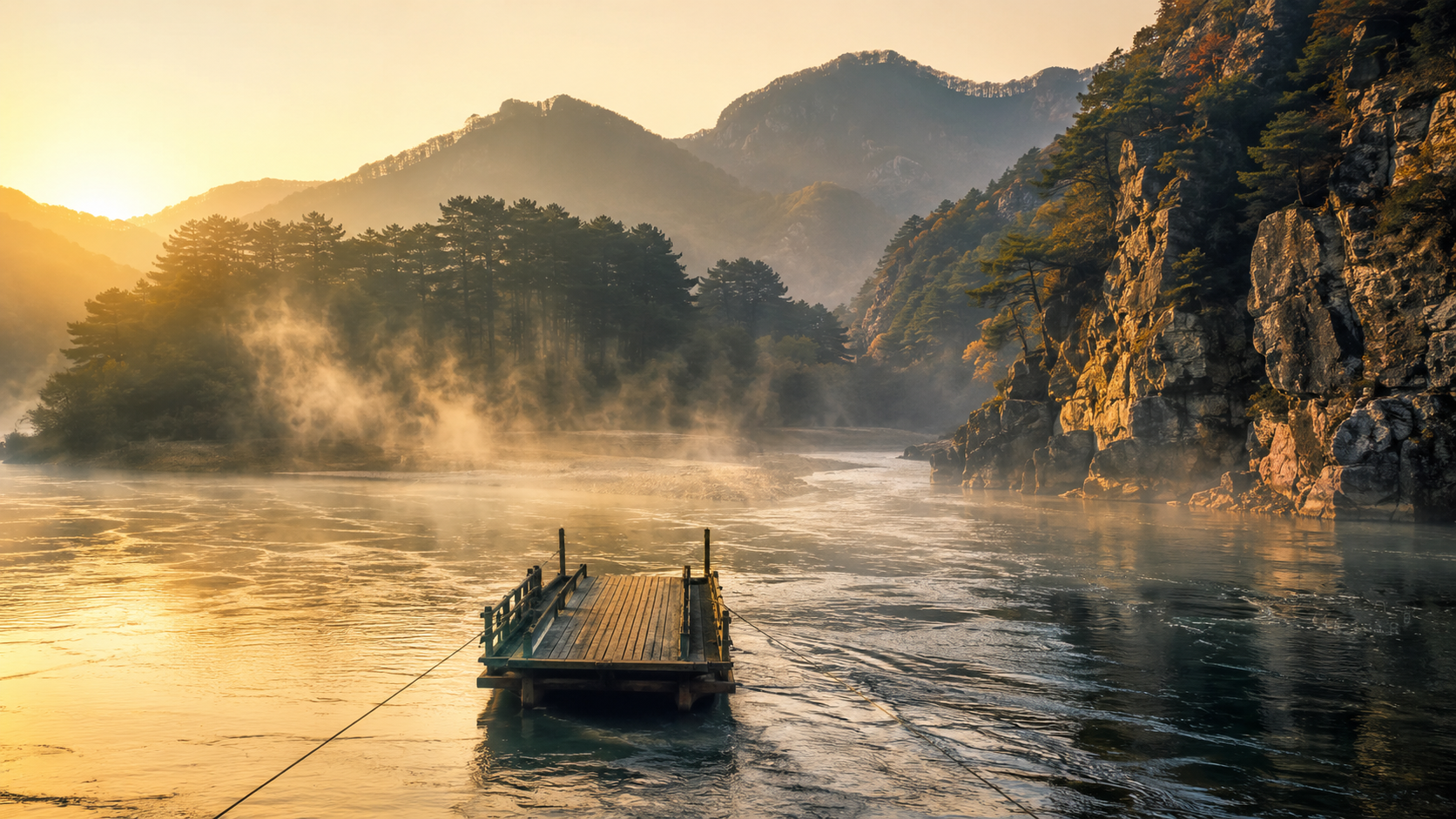
Cover image credit: Image generated by AI (ChatGPT, 2026). AI-generated images are strictly for editorial purposes only, comply with free commercial-use licenses (Unsplash, Pixabay, Pexels), and are not permitted for resale or standalone commercial use. Images do not depict actual people, places, or events.
Editorial & AI Assistance Notice: This article was prepared by HACKsKorea editors with AI assistance (Claude). All facts were verified against official government and institutional sources. This is general information only, not legal advice. Users must confirm the latest details through official government websites or authorized agencies.
Summary at a Glance
Something remarkable happened to the quiet mountain county of Yeongwol (영월) in early 2026. Before February, roughly 400 visitors passed through on a typical weekday, enough to keep the local tea shops warm but not enough to stress the parking lots. Then The King’s Warden hit Korean cinemas and crossed 11 million admissions in just over a month, and Yeongwol transformed almost overnight. Local authorities reported weekday crowds of around 2,000 visitors and weekend surges reaching 6,000. The single ferry crossing the Seogang River (서강) to Cheongnyeongpo (청령포) ran non-stop and still sold out early on busy days. Safety inspectors arrived before the season officially began.
The film tells the story of King Danjong (단종, 1441–1457), the sixth monarch of the Joseon Dynasty (조선왕조). Crowned at 12 years old and stripped of his throne by his ambitious uncle Sejo at 15, Danjong was sent to this remote valley surrounded by steep mountains and bending rivers. He lived here for little more than a year before dying at the age of 17 — widely believed to have been forced to drink poison on his uncle’s orders. The historical character of Eom Heung-do (엄흥도), who secretly recovered and buried the young king’s body at great personal risk, is now more widely known than ever, brought memorably to life by actor Yoo Hae-jin in the film.
What makes the Yeongwol pilgrimage so compelling for international visitors is how intact the historical record remains. These are not reconstructed heritage parks or purpose-built sets — they are the original places where the history actually happened. Cheongnyeongpo is the actual sandbank where the king lived in exile. Jangneung (장릉) is the actual royal tomb where he has rested for more than 560 years, now recognized as a UNESCO World Heritage Site. Gwanpungheon (관풍헌) is the actual building in Yeongwol town where Danjong received the poison. Seondol (선돌) is a confirmed filming location for The King’s Warden and the geological landmark that local records associate with Danjong’s exile journey.
One important clarification for film-motivated visitors: like most Korean historical productions, The King’s Warden combined real Yeongwol locations — particularly Seondol and sections of the Seogang riverbank — with the Mungyeong Saejae Open Set (문경새재 오픈 세트장) in North Gyeongsang Province for certain interior and village scenes. Cheongnyeongpo is the authentic historical exile site but was not the filming location for every scene depicting it in the film. This distinction is addressed fully in the FAQ section. The historical authenticity of these sites stands entirely on its own — they are real places with real stories, whether or not every frame of the film was shot there.
This guide walks you through every essential stop on the Yeongwol pilgrimage — how to get there from Seoul, what to see at each location, how much time and money to budget, and how to make the most of the journey across every season. Whether you are coming for the film, for the history, or simply because a mountain valley with a UNESCO tomb and a 600-year-old pine tree sounds like exactly the kind of place the world needs more of — Yeongwol is worth every hour of the journey.
Key facts at a glance: • Distance from Seoul: approximately 175 km • Travel time by train: 2 to 2.5 hours from Cheongnyangni Station (청량리역) • Travel time by bus: 2 to 2.5 hours from Dong Seoul Bus Terminal (동서울종합터미널) • Main sites: Cheongnyeongpo, Gwanpungheon, Jangneung, Seondol, Korean Peninsula Terrain Viewpoint • Best season: spring (April–May) and autumn (September–November) • Recommended stay: one full day minimum; overnight for a more relaxed experience
What You Need to Know Before You Go
Who This Guide Is For
This travel guide is written for international visitors to South Korea who want to experience Yeongwol as a meaningful cultural destination rather than a quick photo stop. It suits independent travelers, couples, small groups, and families with older children (ages 10 and up, given the historical depth of the sites). Visitors with limited mobility should note that Cheongnyeongpo involves a short boat ride followed by walking on uneven forest ground, and Jangneung requires a gentle uphill walk on a paved path. Seondol can be viewed from a roadside parking area with minimal walking required.
When to Visit
Spring (April and May) is the most rewarding season, for two reasons. First, the landscape along the Seogang River is at its most photogenic, with wildflowers on the sandbank at Cheongnyeongpo and fresh green in the pine forest at Jangneung. Second, the annual Danjong Cultural Festival (단종문화제) takes place every April, and in 2026 the 59th festival ran from April 24 to 26 with a special program dedicated to The King’s Warden, including a director’s talk with Jang Hang-jun and a night-time drone show above the Donggang River. If you missed the 2026 festival, the 2027 edition will take place in April as well.
Autumn (September through November) is the second peak season. The mountains surrounding Yeongwol turn vivid amber and red, and the mist rising off the Seogang in the early morning creates the kind of quiet, cinematic atmosphere that the film captured so effectively. Summer (June through August) brings heavier rainfall and higher humidity, though the Donggang River (동강) becomes popular for rafting and kayaking. Winter visits are possible and surprisingly beautiful — the frozen river surface beside Cheongnyeongpo creates an almost surreal landscape of white ice and dark pine — but the ferry service may be limited depending on water conditions, so always confirm before visiting in December through February.
Budget Overview
Entrance fees in Yeongwol are refreshingly modest by the standards of major tourist attractions in Korea.
• Cheongnyeongpo ferry and admission: Adults 3,000 KRW (approx. USD 2.20) / Teenagers 2,500 KRW / Children 2,000 KRW / Seniors 1,000 KRW • Jangneung Royal Tomb: Free of charge (UNESCO Heritage site) • Gwanpungheon Hall: Free of charge (outdoor historical building in town center) • Seondol: Free of charge (roadside scenic overlook) • Korean Peninsula Terrain Viewpoint (한반도지형): Free of charge • Jeolmundal Y-Park (젊은달 와이파크, optional contemporary art park): Adults and Teenagers 15,000 KRW / Children 10,000 KRW
A comfortable full-day budget including transport from Seoul, entrance fees, lunch, and dinner would be in the range of 60,000 to 90,000 KRW per person (approximately USD 44 to 66), excluding accommodation. Accommodation in Yeongwol ranges from budget guesthouses at around 40,000 KRW per night to mid-range pension-style lodges at 80,000 to 120,000 KRW.
Language Considerations
English-language signage has improved significantly at major sites following the film’s success, with Cheongnyeongpo, Jangneung, and Gwanpungheon now featuring English information panels as well as QR codes linking to Korean Heritage Service (국가유산청) multilingual content. However, Yeongwol town itself is a small rural community where English is spoken only rarely. Having a translation app ready on your phone is strongly advised. Key phrases to know: “청령포” (Cheongnyeongpo) and “장릉” (Jangneung) are recognized by all local taxi drivers and are sufficient for navigation.
Step-by-Step Itinerary Guide
Step 1: Travel from Seoul to Yeongwol (서울에서 영월로 이동하기)
Estimated time: 2 to 2.5 hours one way What you need: Transportation card or cash for tickets, confirmed return schedule 💡 Pro Tip: Book your train ticket on Korail’s website or app at least a few days in advance on weekends; since the film’s release demand has increased noticeably on Friday and Saturday services. ⚠️ Watch out: Yeongwol Station is a small rural stop with very limited taxi availability at the station itself. If you are arriving by train, consider booking a local taxi in advance through the Yeongwol County tourism hotline (1577-0545) or by calling local taxi services directly upon arrival.
By train (recommended for comfort): From Cheongnyangni Station (청량리역) in Seoul, take a Mugunghwa-ho (무궁화호) or Nuriro-ho (누리로) train directly to Yeongwol Station (영월역). The journey takes approximately 2 hours. Trains run several times daily, with early morning departures around 06:30 being the least crowded and best for a full day of sightseeing. From Yeongwol Station, Cheongnyeongpo is approximately 10 to 15 minutes by taxi (about 7,000 to 9,000 KRW).
By bus: From Dong Seoul Bus Terminal (동서울종합터미널), intercity buses run to Yeongwol approximately 13 times per day from 07:00 to 22:00. The journey takes around 2 to 2.5 hours. The Yeongwol Bus Terminal (영월버스터미널) is in the center of town, within walking distance of Gwanpungheon Hall and a short taxi ride from Cheongnyeongpo.
By car: From central Seoul, the drive via the Central Expressway (중앙고속도로) takes approximately 2.5 hours depending on traffic. Follow the Sinrim IC (신림 IC) exit toward Yeongwol and Jucheon. Parking is available at Cheongnyeongpo, Jangneung, and the other main sites at no charge, though during peak season (April–May weekends) arrival before 09:00 is advisable to secure a space near the Cheongnyeongpo ferry dock.
Step 2: Begin at Seondol, the Sentinel of the River (영화 속 선돌 방문하기)
Estimated time: 30 to 45 minutes What you need: Camera, comfortable walking shoes 💡 Pro Tip: Visit Seondol first thing in the morning when the Seogang River is draped in mist — this is exactly the atmospheric visual language The King’s Warden captured, and the early light is far more evocative than the midday sun. ⚠️ Watch out: The parking area at Seondol is small. If you are visiting by car on a weekend, arrive before 09:00 to avoid a long wait.
Seondol (선돌) stands at the edge of the Seogang River approximately 4 km northwest of Yeongwol town center. The name means “standing stone,” and the description is almost too simple for what you find there: a sheer 70-metre column of limestone rock rising directly from the riverbank, its grey surface streaked with centuries of weathering, surrounded on all sides by the dark green of pine forest and the silver curve of the river below.
This is one of the confirmed filming locations for The King’s Warden. The production team captured several sequences at Seondol, exploiting the monumental vertical drama of the rock face to suggest the young king’s sense of isolation and powerlessness against forces larger than himself. In historical tradition, Danjong is said to have passed this rock on his exile journey and remarked that the stone looked like a standing deity — and from that comment, the name “Sinseonam” (신선암, Rock of the Immortal) was also attached to the site.
From the parking area, a short paved path leads to the main viewpoint overlooking both the rock and the river below. For a different perspective, a short hiking trail leads along the ridge where you can look down at Seondol from above. The view at sunset, when the sky turns amber behind the rock, is one of Yeongwol’s most photographed scenes and has become even more popular since the film’s release.
Step 3: Cross the River to Cheongnyeongpo, Danjong’s Island Prison (청령포 도선 탑승 및 관람하기)
Estimated time: 1 hour to 1 hour 30 minutes on site What you need: Admission fee (Adults 3,000 KRW), comfortable walking shoes, water 💡 Pro Tip: The ferry runs continuously during operating hours, but when crowds are large, a queue can form at the dock. Arrive before 10:00 on weekends or during festival season to minimize waiting time and experience the site with fewer people. ⚠️ Watch out: The last admission is at 17:00 and the site closes at 18:00. Do not plan to arrive after 16:30 if you want a full visit.
Operating hours: 09:00 to 18:00 (last admission 17:00) / Closed Mondays Address: 133 Cheongnyeongpo-ro, Yeongwol-eup, Yeongwol-gun, Gangwon-do (강원특별자치도 영월군 영월읍 청령포로 133)
Of all the sites in Yeongwol, Cheongnyeongpo carries the most immediate emotional weight. The short ferry ride across the Seogang River — the boat is small, the crossing takes under two minutes — creates a powerful psychological shift. You step off onto a sandbank that has been cut off from the surrounding land on three sides by the bending river and on the fourth by a sheer cliff face of limestone. Standing on that shore, it is genuinely easy to understand why this remote place was chosen as a site of political exile: there is simply nowhere to go.
Danjong arrived here in the summer of 1457, accompanied by a small group of court officials assigned to watch over him. The site today features a reconstruction of the royal residence (단종어소, Danjong Eoso), a modest thatched building that conveys with quiet restraint what it meant to be a deposed king in a remote mountain valley with the river cutting off every direction.
Inside the forest, follow the path to the Gwaneumsong Pine (관음송, Gwaneumsong). This single pine tree is approximately 600 years old, its trunk split into two great limbs that rise and spread like open arms. Local tradition holds that this tree witnessed the young king’s sorrow and was thus given the name Gwaneumsong — “the pine that listened.” The Korea Heritage Service (국가유산청) has designated it as a Natural Monument (천연기념물 제349호). Standing beneath it, the combination of age, silence, and the story attached to the tree creates an atmosphere that is genuinely unlike anything in a museum.
Also within Cheongnyeongpo, look for Manghyangtan (망향탑, Tower of Longing), a small stone cairn that local tradition says was built by Danjong himself as he gazed in the direction of Hanyang (한양, modern-day Seoul) where his wife, Queen Jeongsun (정순왕후), remained. And at the edge of the forest closest to the cliff, Nosamdae (노산대) is the rocky overlook from which the king is said to have spent long hours looking toward the capital — the word “Nosan” (Nosy Mountain) was the demoted title given to Danjong after his deposition.
Step 4: Walk Through Town to Gwanpungheon Hall (관풍헌 방문하기)
Estimated time: 20 to 30 minutes What you need: No entrance fee; free outdoor historical building 💡 Pro Tip: Gwanpungheon is located in the center of Yeongwol town, which makes this a good moment to stop at one of the nearby restaurants for lunch before continuing to Jangneung. Local buckwheat noodles (메밀막국수) are the regional specialty. ⚠️ Watch out: The building is a public historical site in the middle of town and is accessible at all times, but it is a small and relatively understated structure. Its significance is entirely historical — if you don’t know the story before you arrive, the building itself can seem easy to overlook.
Gwanpungheon Hall (관풍헌, 觀風軒) stands in the center of Yeongwol town, surrounded now by the ordinary streets and shops of a small Korean county seat. The contrast between the ordinariness of the surrounding town and the weight of what happened here is part of what makes the visit meaningful. When Cheongnyeongpo flooded during a particularly heavy summer in 1457, Danjong was moved to Gwanpungheon, the official residence of the local magistrate. And it was here, in this building, that the young king received and drank the poison that ended his life. He was 17 years old.
The building that stands today is a later restoration of the original Joseon-era structure. Its wooden beams, traditional tile roof, and raised wooden floor (대청마루, daecheongmaru) reflect the architectural style of a mid-level provincial official’s residence from the period. Visitors can sit on the wooden floor, look out across the small courtyard, and spend a few quiet minutes with the building’s history. There are information panels in Korean, English, and Chinese. A small marker commemorates the event.
Nearby, Jaha-gwan (자하관) is a secondary historical structure associated with the Gwanpungheon complex and worth a brief look. The surrounding neighborhood has retained a number of older buildings that give the area a slightly different texture from the more modernized streets nearby.
Step 5: Conclude at Jangneung Royal Tomb, the King’s Resting Place (장릉 방문 및 역사관 관람하기)
Estimated time: 1 hour to 1 hour 30 minutes What you need: No entrance fee; comfortable walking shoes for the gentle uphill path 💡 Pro Tip: The Danjong History Hall (단종역사관) at the entrance to Jangneung contains excellent bilingual displays on the king’s story, the court officials who remained loyal, and the figure of Eom Heung-do. Spend 20 to 30 minutes here before walking up to the tomb itself — the context makes the final approach significantly more moving. ⚠️ Watch out: The site is closed on Mondays. If you are visiting on a Monday, the outdoor sections may still be accessible, but the History Hall and formal areas are closed.
Operating hours: 09:00 to 18:00 / Closed Mondays Address: 190 Danjong-ro, Yeongwol-eup, Yeongwol-gun, Gangwon-do (강원특별자치도 영월군 영월읍 단종로 190)
Jangneung (장릉, 莊陵) occupies a hillside about five minutes by car (or 20 minutes on foot) from Gwanpungheon. The approach is through a pine forest on a gently sloping path, and the mood shifts perceptibly as you move away from the sounds of the town. Most Joseon royal tombs are located near Hanyang — the kings were buried close to power, in the hills north of the capital. Jangneung is unique: it is the only royal tomb of the Joseon Dynasty located far from Seoul, the consequence of a king who died in exile.
The tomb itself follows the traditional pungsu (풍수, Korean geomancy) principles of Joseon burial: the burial mound faces south toward water, with a protective hill rising behind it. Stone figures of court officials and animals line the approach. A red-pillared gate and a T-shaped wooden shrine mark the ceremonial area. Ceremonial rites in honor of Danjong have been performed at this site continuously for over five centuries — a tradition of loyalty that outlasted the dynasty itself.
The Jangpanok Shrine (장판옥) within the complex houses memorial tablets honoring the figures who gave their lives in loyalty to Danjong, including the Sayukshin (사육신), six court officials who attempted to restore the king to his throne and were executed for it. A separate commemorative pavilion honors Eom Heung-do (엄흥도, portrayed by Yoo Hae-jin in The King’s Warden), the Yeongwol county chief who secretly recovered Danjong’s body after the king’s death and buried it at the current site, risking execution for defying Sejo’s orders.
In 2009, Jangneung was designated as part of the UNESCO World Heritage Site “Royal Tombs of the Joseon Dynasty” (조선왕릉), a designation recognizing the exceptional cultural significance and physical preservation of the 40 royal tombs across the Korean peninsula. The designation places Jangneung alongside the more famous royal tomb complexes near Seoul, and the UNESCO status is clearly signposted throughout the site.
The History Hall at the entrance displays King Danjong’s royal portrait, ceremonial garments, and a detailed timeline of the events that brought him to Yeongwol. English-language panels cover the main narrative clearly. The hall is compact but well-curated, and the inclusion of The King’s Warden promotional material in the lobby display (as of April 2026) reflects the site’s enthusiasm for the film-driven increase in international visitors.
How the Journey Looks Different by Season and Travel Style
The Day-Tripper from Seoul vs. the Overnight Pilgrim
The most common approach to Yeongwol for international visitors is the day trip from Seoul: morning train, main sites by afternoon, evening return. This is entirely feasible and gives you enough time to cover Cheongnyeongpo, Gwanpungheon, and Jangneung comfortably. A car makes it even more efficient, allowing you to add Seondol and the Korean Peninsula Terrain Viewpoint (한반도지형 전망대) in the same day without rushing.
However, overnight visitors consistently report a different quality of experience. Yeongwol in the evening, after the day visitors have returned to Seoul, becomes remarkably quiet. The town has a handful of simple restaurants and a night sky — far from urban light pollution — that is one of the most accessible stargazing spots in the inland region of Gangwon Province (강원특별자치도). Byeolmaro Observatory (별마로천문대) on Bongnaesan Mountain (봉래산), about 10 minutes from the town center, operates evening programs for public visitors and offers one of the best telescope-assisted views of the night sky in Korea. In spring and autumn, the combination of Jangneung under morning mist and the observatory under the stars is a compelling reason to stay two nights.
Spring: Festivals, Cherry Blossoms, and the Perfect Pilgrimage Season
April is the most popular month to visit Yeongwol, for good reason. The Danjong Cultural Festival (단종문화제), held annually every April for 59 consecutive years as of 2026, transforms the town into a living historical stage. The main programs include the Royal Funeral Procession Reenactment (단종국장행렬), in which hundreds of participants dressed in period costume carry ceremonial objects through the streets from Gwanpungheon to Jangneung; the Danjong Memorial Rite (단종제향) at Jangneung; and the Queen Jeongsun Pageant (정순왕후 선발대회). In 2026, the festival added a director’s talk featuring Jang Hang-jun and cast members of The King’s Warden, as well as a night-time drone show above the Donggang Riverside (동강 둔치) — a program that drew larger than expected crowds. The 2027 festival, to be held in April as well, is expected to maintain similar programming.
Beyond the festival, the landscape in April and early May rewards those who plan carefully. The river banks are dotted with wildflowers, the pine forests at Jangneung are a deep, resinous green, and the early morning light on the Seogang creates the atmospheric mist scenes that define the film’s visual identity.
Autumn: The Golden Valley
September through November brings Yeongwol’s second great season. The mountains enclosing the valley — many rising above 1,000 metres — turn from green to amber and crimson in a sequence that typically peaks in mid-October. Cheongnyeongpo in October, with the pine forest floor covered in fallen needles and the surrounding mountains in full autumn colour, is a scene so overtly cinematic that it is easy to understand why a film director chose to work in this landscape.
The Donggang River (동강) in autumn is also excellent for riverside walks, and the rafting season runs into late September in most years, offering a completely different perspective on the same landscape — seen from the water level of the river rather than from the banks.
Winter: Ice, Silence, and a Frozen Landscape
Winter visits are the least common but perhaps the most quietly extraordinary. When the Seogang freezes in January and February, the surface around Cheongnyeongpo becomes a flat expanse of white ice fringed with snow-laden pines. The ferry may be suspended depending on ice conditions — always confirm in advance with the Yeongwol County Tourism hotline (1577-0545) — but if the crossing is operating, a winter visit to Cheongnyeongpo offers a landscape of near-total silence and visual starkness that brings the isolation of the king’s exile closer than any other season.
Yeongwol Beyond The King’s Warden
For visitors staying overnight, two additional sites are worth considering. The Korean Peninsula Terrain Viewpoint (한반도지형 전망대) is a naturally formed meander of the Pyeongchang River (평창강) that, viewed from above, traces the outline of the Korean Peninsula with astonishing accuracy, including the curves of the east and west coasts and the narrow southern tip. The viewpoint itself is free and involves a short walking trail from the parking area. Jeolmundal Y-Park (젊은달 와이파크, pronounced “Young Moon Y-Park”), a contemporary outdoor art space in Jucheon-myeon (주천면) about 30 minutes from Yeongwol town, offers a visually striking contrast to the historical sites — its signature red sculptural installations and experimental exhibition spaces have made it popular for a younger audience seeking a more contemporary cultural experience (Adults: 15,000 KRW, Children: 10,000 KRW, open 10:00–18:00, closed Mondays).
Real-Life Case Examples
(The following are fictionalized scenarios created for educational purposes. They do not describe any real person, event, or case.)
Case 1: Emma from London — A Solo Traveler Who Almost Missed the Ferry
Emma, 31, a graphic designer from London, visited Yeongwol on a Friday in April as a day trip after spontaneously buying a train ticket from Cheongnyangni the night before. She arrived at Yeongwol Station just after 10:00 and took a taxi to Cheongnyeongpo (about 12,000 KRW), arriving at the dock to find a queue of around 60 people ahead of her — a consequence of the film’s enormous popularity and the festival season overlap.
Her mistake was not having checked whether advance booking was possible or whether early arrival was recommended. She waited approximately 45 minutes for the ferry but found the time usable — there is a small riverside walking area near the dock, and a food stall selling tteok (떡, rice cakes) and sikhye (식혜, sweet rice drink) that made the wait pleasant rather than frustrating.
Once on the island, Emma spent 90 minutes walking the trails, photographing the Gwaneumsong pine, and sitting quietly near the Manghyangtan cairn. The experience, she later wrote on her travel blog, was “the most unexpectedly moving thing I did in three weeks in Korea.” She visited Jangneung in the afternoon and made the last train back to Seoul at 18:40.
Key Lesson: During peak season (April–May and October), plan to arrive at the Cheongnyeongpo ferry dock by 09:30 at the latest on weekdays, and 09:00 on weekends. The wait can be significant but the site itself rewards patience.
Case 2: Hiroshi and Yuki from Tokyo — A Couple’s Overnight Itinerary
Hiroshi, 38, and Yuki, 35, flew to Seoul for a 5-day trip and dedicated the third day to Yeongwol, staying one night at a pension near the Donggang River. They had watched The King’s Warden with English subtitles before leaving Tokyo and arrived with a clear sense of the historical context.
Their itinerary on arrival day: check in, Seondol at sunset (30 minutes), simple dinner of makguksu (메밀막국수, buckwheat noodles) at a local restaurant, Byeolmaro Observatory in the evening. Their second day: Cheongnyeongpo first thing at 09:00, Gwanpungheon mid-morning, Jangneung before lunch, Korean Peninsula Terrain Viewpoint in the afternoon before driving back to Seoul.
The overnight stay made a significant difference to both of them, they reported. The observatory program involved an English-speaking guide for the main presentation, and the views of the Milky Way over the valley were something neither had experienced before. Hiroshi said the following morning’s visit to Jangneung, with the forest entirely quiet and the mist still on the path, was the highlight of the entire Korea trip.
Key Lesson: If budget and schedule allow, an overnight stay in Yeongwol transforms the experience from a historical tour into a genuine retreat. Book accommodation at least two weeks in advance during April and October.
Case 3: Priya from Singapore — Navigating Yeongwol Without a Car
Priya, 27, a teacher based in Singapore, visited Yeongwol by train and public bus, specifically testing whether the town was accessible without renting a car. Her conclusion: possible, but requiring careful planning.
From Yeongwol Station, she took a local bus (Route 51) toward the town center and then a taxi to Cheongnyeongpo (around 8,000 KRW from the bus terminal). After visiting the site, she walked 25 minutes to Gwanpungheon in town — a pleasant walk through the town center — then took a taxi to Jangneung (around 5,000 KRW). For Seondol, she arranged a round-trip taxi from Jangneung (approximately 15,000 to 18,000 KRW for the round trip) rather than relying on the infrequent local bus service.
The total taxi spend for the day was around 35,000 KRW. She felt this was excellent value given that it would have been impossible to reach all four main sites purely by public bus within a single day. Her recommendation for other non-driving visitors: download the Kakao T (카카오T) ride-hailing app before arriving, as it allows you to call taxis in small towns more reliably than hailing from the street.
Key Lesson: Yeongwol is accessible without a car but requires budgeting for short taxi trips between sites. The Kakao T app works in rural areas and removes the language barrier of hailing local taxis.
Case 4: Marcus from Berlin — A Photography-Focused Trip in October
Marcus, 44, a freelance photographer from Berlin, spent two full days in Yeongwol in mid-October, specifically for autumn landscape photography. He arrived knowing that the morning mist on the Seogang River typically lasts until around 09:30 and was at the Seondol parking area by 06:30 — well before the site opened for official visits, but the road overlook is publicly accessible at all times.
His strategy was to photograph Seondol in the dawn mist, then cross to Cheongnyeongpo for the opening of the ferry at 09:00 to capture the pine forest in early morning light before the crowds arrived. He returned to Seondol again at sunset for the golden light on the cliff face, which he described as “worth the entire journey.”
The second day he spent at Jangneung, where the autumn colour was at its peak on the hillside forest path. He also photographed the Korean Peninsula Terrain from the viewpoint in the afternoon, when the shadows of the surrounding hills add depth and contrast to the aerial-like perspective of the river curve below.
Marcus found that the density of photographic subjects within a small geographic area — all the main sites are within 10 km of each other — made Yeongwol one of the most efficient photography destinations he had visited in Korea.
Key Lesson: For photography, Yeongwol rewards early risers. Dawn at Seondol and opening time at Cheongnyeongpo give you at least an hour before crowds arrive, and autumn light on the Seogang River is exceptional from September through early November.
Case 5: The Kim Family from Los Angeles — A Multigenerational Visit
The Kim family — grandparents in their 70s, parents in their 40s, and two teenagers — drove to Yeongwol from Seoul as part of a Korean heritage visit during Chuseok (추석) week. Grandmother Kim had last visited Cheongnyeongpo as a child in the 1960s and was returning to share the experience with her grandchildren, who had watched The King’s Warden and been genuinely moved by it.
The family found the sites accessible for older visitors. Cheongnyeongpo’s internal trails are mostly flat and the walking surface is compressed earth, manageable for mobile elderly visitors. The ferry is a short, stable crossing. Jangneung’s main path is gently sloped and paved. Gwanpungheon’s courtyard is flat and requires minimal walking.
What the family found most valuable was the way the film provided the younger generation with an emotional framework that made the historical sites immediately meaningful. The teenagers recognized the locations, knew the story, and asked questions their parents could not have anticipated during a previous visit. Grandmother Kim said that the film had done something that years of school history classes had not quite achieved — it had made Danjong feel like a real person rather than a historical name.
Key Lesson: For multigenerational family visits, watching The King’s Warden together before arriving in Yeongwol significantly enhances the experience for younger visitors. The main historical sites are physically accessible for older visitors with moderate mobility.
Case 6: Ana from São Paulo — A Long-Weekend Korean History Circuit
Ana, 33, a journalist from São Paulo visiting Korea on a press trip, built a three-day Korean history circuit: Day 1 in Seoul’s Gyeongbokgung area, Day 2 in Yeongwol, Day 3 at the Joseon royal tomb cluster in Guri (구리) and Namyangju (남양주) before returning to Seoul. The Yeongwol day was the emotional centerpiece of the three, partly because the isolation of the site created an intensity that the grander urban palace complexes did not.
She had not seen The King’s Warden before the visit but had read about its box-office success and the UNESCO Heritage status of Jangneung. By the end of the day at Jangneung, she had downloaded the film to watch on the flight back to Seoul. “I came for the UNESCO stamp,” she wrote, “and I left with something more personal than that — the feeling that this place had been holding a story that most of the world simply hasn’t heard yet.”
Her recommendation for journalists and content creators: request a media briefing from Yeongwol County Cultural Tourism (영월군 문화관광) in advance. The county has invested significantly in English-language materials since the film’s success and is actively courting international media coverage.
Key Lesson: Yeongwol’s historical sites carry independent cultural weight beyond the film connection. The UNESCO designation at Jangneung and the National Monument status of the Gwaneumsong pine offer internationally recognized credentials that justify the journey for visitors with a general cultural interest in Korea.
Frequently Asked Questions
1. How far is Yeongwol from Seoul, and how long does it take to get there?
Yeongwol (영월) is located approximately 175 km east of central Seoul, in the southern part of Gangwon Province (강원특별자치도). By train from Cheongnyangni Station (청량리역), the journey to Yeongwol Station (영월역) takes approximately 2 to 2.5 hours on a Mugunghwa-ho (무궁화호) or Nuriro-ho (누리로) service. Trains run several times daily, with the first departure typically around 06:00 and the last return from Yeongwol to Seoul in the early evening. It is advisable to confirm current timetables on the Korail website (www.letskorail.com) as schedules are subject to seasonal adjustment.
By intercity bus from Dong Seoul Bus Terminal (동서울종합터미널), the journey to Yeongwol Bus Terminal takes approximately 2 to 2.5 hours on a direct service operating around 13 times daily between 07:00 and 22:00. By private car from central Seoul, the drive via the Central Expressway (중앙고속도로) takes approximately 2.5 hours in normal traffic conditions; travel times on Friday evenings and public holidays may be significantly longer.
For international visitors flying into Incheon International Airport (인천국제공항), the most efficient route to Yeongwol is via the Airport Railroad to Seoul Station or Cheongnyangni, followed by either a train or bus connection. Total travel time from Incheon to Yeongwol is approximately 3.5 to 4 hours door-to-door. Driving from Incheon via the expressway takes a similar amount of time and offers more flexibility for onward travel once in Yeongwol.
One option increasingly popular with international tourists since the film’s release is the organized day tour from Seoul. Several tour operators now offer Yeongwol day packages that include transportation, a guided English-language visit to the main sites, and lunch. These tours remove the logistical challenge of navigating rural transportation and are worth considering if you prefer a structured experience over independent travel.
2. Is Cheongnyeongpo actually a filming location for The King’s Warden?
This is one of the most common questions from visitors who have seen the film. The answer requires some nuance. Cheongnyeongpo (청령포) is the authentic historical location where King Danjong lived in exile — there is no question about that. However, not all of the scenes in The King’s Warden that appear to depict Cheongnyeongpo were filmed on the actual site. Like many Korean historical films, the production used a combination of authentic locations and reconstructed sets to achieve the desired visual result.
Seondol (선돌) is confirmed as an actual filming location, as are certain riverbank sequences along the Seogang. Several interior and village sequences were filmed at the Mungyeong Saejae Open Set (문경새재 오픈 세트장) in North Gyeongsang Province, a purpose-built period film village that has served as a location for numerous Korean historical productions. This is consistent with standard practice in Korean cinema and does not diminish the historical significance of visiting the real sites in Yeongwol.
For visitors motivated primarily by the film itself, Seondol is the most authentic on-screen location to visit. For visitors interested in the historical story that inspired the film, Cheongnyeongpo, Gwanpungheon, and Jangneung are irreplaceable. In practice, most visitors to Yeongwol find that the two motivations reinforce each other — the film provides the emotional entry point, and the real locations provide a depth that no film set can replicate.
3. What is the Gwaneumsong pine and why is it significant?
The Gwaneumsong (관음송, 觀音松) is a Scots pine estimated to be approximately 600 years old, growing in the pine forest of Cheongnyeongpo. The name translates roughly as “the pine that listened” or “the pine that heard” — gwan (觀) meaning to observe or hear, and eum (音) meaning sound or voice. Local tradition holds that this tree witnessed King Danjong’s sorrow during his years of exile and thus received the name as a memorial to that silent companionship.
The tree has been designated as a Natural Monument of Korea (천연기념물 제349호) by the Korea Heritage Service (국가유산청), the national body responsible for the protection of cultural and natural heritage. In practical terms, this designation gives the tree the same level of official protection as a significant historical building. No branches may be cut, no soil may be excavated around the root system, and the area around the tree is managed to preserve the growing conditions of its ecosystem.
What makes the Gwaneumsong visually distinctive is the way its trunk has split into two major limbs that curve upward and outward, creating a V-shaped silhouette of considerable drama. The trunk base has a circumference of approximately 5 metres. Dendrochronological estimates place the tree’s germination in the early 15th century, meaning it was already a substantial pine when Danjong arrived in 1457. The combination of its physical scale, its visual character, and its historical association makes it one of the most emotionally affecting individual trees in Korea — and one of the most photographed.
Visitors should note that while the Gwaneumsong is accessible via the walking trail at Cheongnyeongpo, touching the tree, climbing it, or approaching closer than the barrier allows is strictly prohibited. The barriers are in place to protect the root system from compaction damage caused by foot traffic.
4. What is the Danjong Cultural Festival and when does it take place?
The Danjong Cultural Festival (단종문화제) is Yeongwol County’s annual festival honoring the life and legacy of King Danjong. The festival has been held every spring for 59 consecutive years as of 2026, making it one of the longest-running historical festivals in Gangwon Province. It takes place every April across multiple venues throughout Yeongwol, including the Donggang Riverside (동강 둔치), Jangneung Royal Tomb, Gwanpungheon Hall, and Cheongnyeongpo.
The centerpiece of the festival is the Royal Funeral Procession Reenactment (단종국장행렬, also known as the night procession in recent years), in which hundreds of participants dressed in historically researched period costume carry ceremonial objects from Gwanpungheon to Jangneung as a symbolic retracing of the king’s final journey. The procession has become one of the most atmospheric historical performances in Korea and draws large crowds, including significant international interest since the release of the film.
Other major programs include the Danjong Memorial Rite (단종제향) at Jangneung, the Queen Jeongsun Pageant (정순왕후 선발대회) honoring the king’s wife, an Arrowroot Vine Tug-of-War (칡줄다리기) competition, and a Royal Cuisine Cooking Competition (어선탕 요리대회). In 2026, the festival also featured a talk with director Jang Hang-jun and selected cast members of The King’s Warden, and a night-time drone show choreographed above the Donggang River.
For international visitors planning a spring trip to Korea, attending the Danjong Cultural Festival significantly enriches a Yeongwol visit by adding a living, participatory dimension to the historical sites. The festival is free to attend, though some specific programs may have limited seating and require advance registration. Check the Yeongwol County Cultural Tourism website (www.yw.go.kr/tour) for the annual program announcement, typically released in February or March.
5. What local food should I try in Yeongwol?
Yeongwol sits in a mountain valley in the southern part of Gangwon Province, a region known for its buckwheat-based cuisine and freshwater fish dishes. The local food reflects the rural and mountainous character of the area — hearty, simple, and deeply satisfying after a day of walking historical sites.
Makguksu (막국수) is the regional signature dish: buckwheat noodles served cold in a broth that varies by restaurant, topped with cucumber, egg, sesame, and kimchi. The version specific to Gangwon Province is slightly different from the Seoul interpretation — the noodles tend to have a more pronounced buckwheat flavor and a firmer texture. Several restaurants near the Yeongwol bus terminal and town center serve excellent makguksu for around 10,000 to 13,000 KRW.
Gondeure bap (곤드레밥) is a rice dish cooked with gondeure (고려엉겅퀴), a variety of thistle that grows wild in the Gangwon mountains and has a delicate, grassy flavor. Served with a range of small vegetable side dishes (banchan, 반찬), it is one of the most representative dishes of the inland Gangwon culinary tradition.
Freshwater fish dishes are a specialty along the Donggang River, which is one of the cleanest rivers in Korea and supports a healthy population of trout and other freshwater species. Local restaurants near the river serve grilled fish and spicy fish stew (매운탕, maeuntang) that showcase the freshwater ingredients in a bold, warming preparation.
At the local market — Yeongwol Seobu Market (영월서부시장) operates on days ending in 2 or 7 of the month (2nd, 7th, 12th, 17th, 22nd, 27th) — look for memil-jeonbyeong (메밀전병), thin buckwheat crepes filled with kimchi or vegetables, sold from market stalls at around 1,500 KRW each. These are best eaten immediately, warm from the griddle.
6. How do I take the ferry to Cheongnyeongpo and what should I know about the crossing?
The ferry crossing to Cheongnyeongpo is one of the site’s defining experiences and merits more attention than it might initially receive. The crossing is short — the ferry is a small, flat-bottomed boat that traverses approximately 150 metres of the Seogang River — but the act of taking the boat is practically meaningful: Cheongnyeongpo can genuinely only be reached by crossing the river, and this physical separation from the rest of the county is what made it suitable as an exile site in the first place.
The ferry dock is located at the address: 133 Cheongnyeongpo-ro, Yeongwol-eup. Admission tickets are purchased at the ticket booth before boarding. Adults pay 3,000 KRW, teenagers 2,500 KRW, children 2,000 KRW, and senior citizens 1,000 KRW. The entrance fee covers both the ferry crossing (both directions) and admission to the site.
Ferries run continuously during operating hours — 09:00 to 18:00, with last admission at 17:00. The boats are small, typically carrying 12 to 20 passengers per crossing, and the frequency of departures depends on demand. During peak season (April–May and October), particularly on weekends, a queue can form at the dock. The wait rarely exceeds 45 minutes even on the busiest days, but arriving early in the morning significantly reduces waiting time.
There are two safety rules that apply at all times: all passengers must wear a life jacket for the crossing (jackets are provided at the dock), and only the designated number of passengers may board each boat. These rules are strictly enforced. The Seogang River, while not a fast-moving waterway at this point, has a strong current and is not suitable for swimming. Children must be accompanied by adults on the ferry.
Note that the ferry service may be suspended temporarily during extreme weather events, including high water levels following heavy summer rainfall, and during winter when ice conditions make the crossing unsafe. Always confirm the operational status of the ferry before planning a visit in January, February, and early March by calling the Cheongnyeongpo management office at 033-370-2657.
7. Is Jangneung UNESCO-listed and what does that mean for my visit?
Yes, Jangneung (장릉) is part of the UNESCO World Heritage Site designated in 2009 under the name “Royal Tombs of the Joseon Dynasty” (조선왕릉). The designation covers 40 royal tombs distributed across the Korean peninsula and reflects their exceptional universal value as a group of cultural properties embodying the Joseon Dynasty’s political culture, burial traditions, geomantic philosophy, and ceremonial practice.
For visitors, the UNESCO designation means several things practically. First, the site is maintained to an international standard of preservation, with restrictions on construction, commercial activity, and modification within the protected buffer zone. Second, the site benefits from enhanced documentation and interpretation, including the Danjong History Hall (단종역사관) at the entrance with bilingual displays. Third, the UNESCO status lends international recognition to the site that makes it easier to contextualize for international visitors accustomed to visiting world heritage sites in other countries.
Jangneung is unique among the 40 Joseon royal tombs for several reasons already noted — its location far from Seoul, the circumstances of the king’s death in exile, and the separate commemoration of court officials and the local chief Eom Heung-do within the same complex. These characteristics give Jangneung a human narrative dimension that many of the more formally imposing royal tombs near Seoul lack.
Admission to Jangneung is currently free of charge for all visitors, which is a policy that the Korea Heritage Service (국가유산청) has maintained for the site. Operating hours are 09:00 to 18:00 (closed Mondays). The address is 190 Danjong-ro, Yeongwol-eup, Yeongwol-gun, Gangwon-do. There is a free parking area at the site entrance. The Danjong History Hall closes 30 minutes before the main site closing time.
8. What is the best way to spend two days in Yeongwol?
A two-day Yeongwol itinerary allows for a genuinely unhurried engagement with all the major sites and several supplementary destinations. The following structure is recommended for visitors with two full days and access to a car.
Day 1 (history focus): Arrive and check in to accommodation before noon. Visit Seondol in the afternoon for the early afternoon light on the river. Walk the short trail to the upper viewpoint. Continue to Gwanpungheon Hall in town for a brief historical orientation. Dinner of gondeure bap or makguksu at a local restaurant. Evening at Byeolmaro Observatory (별마로천문대) — reservations for the telescope program are recommended and available online.
Day 2 (heritage and nature focus): Cheongnyeongpo first thing at 09:00 when the site opens and crowds are minimal. Allow 90 minutes for a thorough visit including the Gwaneumsong, Manghyangtan, and Nosamdae overlook. Continue to Jangneung for 60 to 90 minutes including the History Hall. Lunch in town. Afternoon visit to the Korean Peninsula Terrain Viewpoint (한반도지형 전망대) — the walk to the viewpoint takes about 20 minutes from the parking area, and the view of the river bend is best in the mid-afternoon light. Optional: add Jeolmundal Y-Park (젊은달 와이파크) in Jucheon-myeon for a contemporary art experience before the drive back to Seoul.
For visitors without a car, the Day 2 itinerary requires taxi connections between sites. Budget approximately 30,000 to 40,000 KRW for local taxi use across the two days.
9. Are there accommodation options in Yeongwol that are comfortable for foreign visitors?
Yeongwol is a small rural county with accommodation options that reflect its character — practical, reasonably priced, and overwhelmingly oriented toward the Korean domestic traveler market. That said, the increase in tourism since the film’s release has brought improvements in the quality and availability of accommodation, and English-language booking is possible through platforms like Booking.com, Agoda, and Airbnb.
The most comfortable option for international visitors seeking reliable quality is Donggang Sistar Resort (동강시스타 리조트) at 160 Sajimak-gil, Yeongwol-eup, operated by Tops Ten Hotel chain. Rooms are hotel-standard with en-suite bathrooms, and some rooms have river views. Room rates are typically in the range of 100,000 to 150,000 KRW per night. This property books quickly during April festival season and autumn weekends — reservations at least three to four weeks in advance are strongly recommended during peak periods.
For a more characterful experience, a number of pension-style guesthouses (펜션, pension) operate along the Donggang and Seogang rivers. These are private home-style accommodations with rooms typically priced at 60,000 to 90,000 KRW per night, including basic breakfast in some cases. Facilities vary; booking through a platform that includes genuine guest reviews is advisable to manage expectations.
Budget travelers and backpackers can find guesthouses (게스트하우스, geusteuhaseu) and small motels in Yeongwol town center for 35,000 to 50,000 KRW per night. These are suitable for single-night stays and are located within walking distance of Gwanpungheon Hall and the town’s restaurants. English-language communication at these establishments is limited; having your booking confirmation in Korean is helpful.
10. What time of year should I avoid visiting Yeongwol?
No time of year makes Yeongwol a bad destination, but there are practical considerations that may affect specific visitor preferences. The heaviest rainfall period in Korea typically falls in July and August (the monsoon season, known as jangma, 장마), when daily rainfall can be significant and some outdoor activities become less comfortable. Cheongnyeongpo is accessible year-round, but note that if the Seogang River rises significantly after heavy rainfall, the ferry service to Cheongnyeongpo may be temporarily suspended for safety reasons — exactly as occurred in 1457 when flooding forced Danjong to relocate from Cheongnyeongpo to Gwanpungheon in the first place. River levels are monitored by local authorities, and the Yeongwol tourism hotline (1577-0545) can advise on current conditions.
The winter period from late January through February can bring extreme cold — Yeongwol sits in an inland mountain valley that tends to have colder winters than the Korean coast. Temperatures can drop to minus 15 degrees Celsius or lower on the coldest nights. While this creates the extraordinary frozen river landscape described earlier, it requires proper cold weather clothing and footwear with good grip for potentially icy paths. The Byeolmaro Observatory and some of the indoor museum facilities may have reduced winter hours — always verify before visiting.
The period immediately before and after the Chuseok (추석) and Seollal (설날) public holidays sees significant domestic travel and can create congestion on major expressways, making the drive from Seoul longer than usual. If visiting during a major Korean national holiday period, allowing extra travel time or using the train rather than driving is advisable.
11. What is Seondol and why is it connected to The King’s Warden?
Seondol (선돌, 立石) is a naturally formed limestone column rising approximately 70 metres from the bank of the Seogang River, located about 4 km northwest of Yeongwol town center. The Korean Heritage Service (국가유산청) has designated it as Scenic Site No. 543 (명승 제543호), a designation recognizing its outstanding natural landscape value. The name literally means “standing stone,” describing a geological feature formed over millions of years as the river eroded the surrounding softer rock, leaving this harder column exposed as a dramatic vertical outcrop.
The connection to The King’s Warden is both cinematic and historical. The production team filmed sequences at Seondol that exploited the sheer vertical drama of the rock face — the column rising from the water against the backdrop of forested mountains created a visual metaphor for the young king’s isolation that required no special effects to achieve. The landscape was simply already there, doing what it had always done.
The historical connection predates the film by five and a half centuries. Local tradition in Yeongwol holds that Danjong passed Seondol on his journey into exile and remarked on the rock’s imposing presence. This story gave the location an alternative name, Sinseonam (신선암, Rock of the Immortal), and established it in local memory as a place associated with the king’s passage. Whether the historical account is precisely accurate cannot be confirmed, but the tradition is old and consistently recorded in local chronicles.
Visiting Seondol requires no admission fee and no ferry crossing. The site is accessible from a small parking area off the main road, with a short paved path to the primary viewpoint overlooking both the rock and the river bend. For the upper perspective, a hiking trail along the ridge above requires approximately 20 minutes of moderately steep walking and rewards the effort with a view looking down at the column from above — a perspective that makes its scale even more apparent. The site is open at all hours, though the road and parking area are best navigated in daylight.
12. Can I visit all the main Yeongwol sites in a single day without a car?
The short answer is yes, with planning and some taxi use. The main sites — Cheongnyeongpo, Gwanpungheon, Jangneung, and Seondol — are spread across a radius of approximately 7 km centered on Yeongwol town. Public bus service exists within the county but runs infrequently on many routes, making taxis the practical choice for connecting between sites on a day visit.
A recommended no-car day itinerary: Take the morning train from Cheongnyangni to Yeongwol Station (arriving around 09:00–09:30). Take a taxi from the station to Cheongnyeongpo (approximately 8,000 to 10,000 KRW, 10 to 15 minutes). Spend 90 minutes at Cheongnyeongpo. Take a taxi back toward town, stopping at or walking to Gwanpungheon Hall (approximately 4,000 to 5,000 KRW). After Gwanpungheon, walk to a nearby restaurant for lunch (the town center is compact and walkable). Take a taxi from town to Jangneung (approximately 3,000 to 5,000 KRW). Spend 60 to 90 minutes at Jangneung. Take a taxi to Seondol for the viewpoint (approximately 6,000 to 8,000 KRW). After Seondol, take a taxi back to Yeongwol Bus Terminal or train station for your return to Seoul.
Total taxi expenditure for this itinerary: approximately 25,000 to 35,000 KRW. The Kakao T app (카카오T) works in Yeongwol for calling taxis and is more reliable than street-hailing in a small town. If you prefer not to use an app, the Yeongwol County tourism hotline (1577-0545) can advise on local taxi contact numbers.
The Korean Peninsula Terrain Viewpoint (한반도지형 전망대) is more difficult to reach without a car, as it is located approximately 25 km from Yeongwol town in Han-bando-myeon (한반도면). Including it in a car-free day trip is possible with a dedicated taxi round trip (approximately 30,000 to 40,000 KRW for the return trip) but adds significant cost and time. For a first visit, the priority sites are Cheongnyeongpo, Gwanpungheon, Jangneung, and Seondol; the terrain viewpoint is best saved for a return visit with a car.
13. What is Byeolmaro Observatory and is it worth visiting?
Byeolmaro Observatory (별마로천문대, Byeolmaro Star Observatory) is a public astronomical observatory operated by Yeongwol County, located on the summit of Bongnaesan Mountain (봉래산) at an altitude of approximately 800 metres above sea level. The name is a compound of the Korean words for “star” (별, byeol), “summit” (마루, maru), and “road” (로, ro) — roughly translating as “the road to the stars at the summit.”
The observatory is recognized as one of the best public stargazing facilities in Korea, a country where light pollution from urban development has significantly reduced the quality of night sky viewing in most populated areas. Yeongwol’s location in an inland mountain valley, away from major cities and industrial centers, gives it a dark sky quality that is increasingly rare on the Korean peninsula. On clear nights, the Milky Way is visible to the naked eye from the observatory’s outdoor platforms, something that is simply not possible from Seoul or most other major Korean cities.
Evening visitor programs typically include a presentation (available in Korean, with English available by advance arrangement), access to the main telescope, and time on the outdoor platforms with a staff member available to guide identification of major constellations and seasonal features. The facility also has an indoor exhibition on astronomy and space science. Admission and program fees vary by season; current information and reservation are available at the observatory’s official website or through the Yeongwol County tourism hotline.
Access to the observatory requires either a car (the mountain road is narrow but paved) or the observatory’s shuttle bus, which operates from Yeongwol town center during evening programs. Evening programs typically begin at dusk and run for approximately two hours, with program times varying by season as dusk times change throughout the year. Booking at least a few days in advance is recommended during peak season.
For visitors staying overnight in Yeongwol, the observatory is one of the most memorable additions to the itinerary and one that is genuinely difficult to replicate elsewhere in Korea without traveling to remote rural areas. The combination of a day at Cheongnyeongpo and an evening at Byeolmaro creates a journey that spans 600 years of Korean history and the full depth of the night sky in a single day.
14. What is the Korean Peninsula Terrain Viewpoint and how do I get there?
The Korean Peninsula Terrain (한반도지형, Hanbando Jibhyeong) is a naturally formed meander of the Pyeongchang River (평창강) in the Han-bando-myeon district of Yeongwol County, approximately 25 km west of Yeongwol town center. Viewed from the designated hilltop observation deck, the river bend traces the outline of the Korean Peninsula with remarkable precision, including the curved western coastline, the squarer eastern coast, and the narrow southern peninsula shape — all formed entirely by natural erosion processes over geological time.
The viewpoint is one of Yeongwol’s most distinctive attractions for visitors with an interest in natural curiosities and landscape photography. The observation deck is reached via a 20-minute walking trail from the parking area at the base of the hill (address: 555 Hanbando-ro, Hanbando-myeon, Yeongwol-gun). The trail is well-maintained but includes sections of wooden boardwalk and steps that may be slippery in wet weather. Entrance to the site and the viewpoint is free of charge.
For the best visual impression, visit in the afternoon when the light creates contrast between the river and the surrounding agricultural terraces. The view is most dramatic in autumn when the colours of the hillside forest add additional visual layers to the landscape. Early morning visits in spring and autumn may encounter the mist rising from the river — a beautiful but photographically challenging condition.
The site is not easily reachable by public transport, making a car or a dedicated taxi excursion the practical options. If visiting by taxi, the round trip from Yeongwol town will typically cost 30,000 to 40,000 KRW. The site has a small car park, a toilet facility, and a basic food stall operating during peak season. There is no admission charge.
15. Is there anything to do in Yeongwol in the evening?
Yeongwol is a small, rural county that closes down relatively early by the standards of Korean cities. Most restaurants in the town center serve until around 21:00, and the town itself is quiet by 22:00. However, the quiet is itself part of the appeal — and there are two genuinely worthwhile evening activities.
The first is the Byeolmaro Observatory (별마로천문대), described in FAQ 13, which offers the best public stargazing facility in Gangwon Province. Evening programs run until approximately 22:00 or 23:00 depending on the season. This is the strongest recommendation for evening activity in Yeongwol.
The second is a riverbank walk along the Donggang (동강) or Seogang (서강), both of which run through or near the town. The rivers are completely dark after sunset in the absence of significant riverside lighting — a profound contrast to the illuminated riverbanks of Seoul — and the sound of running water with the stars overhead creates an atmosphere that is extraordinarily restorative after a day of historical sightseeing.
During festival season in April, the Donggang Riverside Area (동강 둔치) hosts evening events including the Royal Funeral Procession Reenactment (단종국장행렬), which is the most atmospheric cultural event available in Yeongwol and is not to be missed if your visit coincides with festival dates. In 2026, the procession drew crowds of several thousand observers and was described by attendees as deeply moving despite (or because of) its straightforward historical presentation.
The town’s western market (영월서부시장) on market days (days ending in 2 or 7 of the month) operates into the early evening and is worth a brief walk for market food and a glimpse of genuine rural Korean commercial life. Evening meal options in town include restaurants specializing in makguksu (막국수, buckwheat noodles), gondeure bap (곤드레밥, thistle rice), and freshwater fish dishes — all more interesting and authentic than what can be found at comparable price points in Seoul.
16. How busy does Yeongwol get on weekends after The King’s Warden’s release?
The impact of The King’s Warden on visitor numbers to Yeongwol has been substantial and well-documented. Before the film’s release in February 2026, the county received approximately 400 visitors on a typical weekday. Following the film crossing 11 million admissions in just over a month, local authorities reported weekday visitor numbers of approximately 2,000 and weekend peaks of up to 6,000. The Cheongnyeongpo ferry was extended to continuous operation and in some cases sold out early on busy days, prompting the Gangwon Provincial Government to conduct a special safety inspection of the ferry service in early March 2026.
By the April festival period, the situation had stabilized somewhat as local infrastructure adapted — additional temporary food and beverage stalls were established near the ferry dock, toilet facilities were expanded, and crowd management protocols were introduced at the busiest entry points. The ferry queue on busy festival weekends in April was reported at 45 to 60 minutes maximum.
For visitors planning trips after May 2026, several practical observations apply. First, the acute surge associated with the initial film release period tends to moderate over the following months as the news cycle moves on, though a sustained baseline increase above pre-film levels is expected to persist. Second, weekday visits are consistently less crowded than weekends — arriving on a Tuesday or Wednesday in April is likely to give you near-empty sites compared to the Saturday experience. Third, early arrival (before 09:30) at Cheongnyeongpo on any day significantly reduces waiting time at the ferry dock.
The county’s response to the increased interest has been positive. Interpretive materials have been improved, English-language signage expanded, and tourism infrastructure developed at a pace unusual for a rural county. The momentum created by the film appears to have catalyzed investment that will benefit future visitors regardless of whether they were motivated by the film or by independent interest in Korean history.
17. What should I buy as a souvenir in Yeongwol?
Yeongwol’s souvenir culture is modest and agricultural in character — this is not a town with the polished souvenir shops of Gyeongju or the craft markets of Insadong. But there are several genuinely worthwhile things to take home that reflect the region’s identity.
Local agricultural products make the most meaningful souvenirs. Gondeure (곤드레, mountain thistle) is sold dried in vacuum-sealed packages at local shops and markets — at home, it is prepared by soaking and adding to rice or soup. Gangwon buckwheat (메밀) flour, from which makguksu and jeonbyeong are made, is available in larger portions suitable for cooking at home. Local honey (꿀) from the mountain wildflowers of the Gangwon valley is of high quality and sold at the market and at roadside stalls near the main tourist sites.
For culturally specific souvenirs, the gift shop at Jangneung (장릉) sells items associated with King Danjong and the Joseon Dynasty — ceramic pieces, printed materials, and decorative items produced by local artisans. The Danjong Cultural Festival in April operates artisan booths with handmade crafts including traditional embroidery and woodwork. The Yeongwol County public market (영월서부시장, on days ending in 2 or 7) is the best place to find locally produced goods at prices oriented toward the domestic market rather than tourist markup.
One item increasingly popular since the film’s release is the Danjong-themed illustrated goods — notebooks, postcards, and small prints — available at the Jangneung gift shop and at some of the newer tourism shops that have opened in the town center since early 2026. These are produced in coordination with the county’s cultural tourism office and reflect a thoughtful approach to merchandise that does not trivialize the historical story.
18. Is Yeongwol suitable for visitors with mobility limitations?
Yeongwol’s major historical sites have varying levels of accessibility for visitors with mobility limitations, and it is worth assessing each site individually rather than treating them as a group.
Gwanpungheon Hall (관풍헌) is the most accessible of the main sites. The surrounding area is flat and paved, and the building’s courtyard and exterior are easily navigable for visitors in wheelchairs or with limited walking ability. The raised wooden floor (대청마루) of the building itself is accessed by a step and is not wheelchair-accessible, but the exterior and courtyard experience is complete without entering the structure.
Jangneung Royal Tomb (장릉) has a paved approach path from the parking area to the main tomb complex. The slope is gentle, but a manual wheelchair would require assistance in places. The Danjong History Hall at the entrance is flat and fully accessible. The inner sections of the tomb area involve more uneven ground on the hill, and access to the burial mound itself involves steps.
Cheongnyeongpo requires a boat crossing, which involves stepping into and out of a small flat-bottomed ferry. For visitors with mobility limitations, this transition may be challenging depending on the degree of limitation. The forest trails inside Cheongnyeongpo are on natural compressed earth surfaces with some root intrusion, which can be uneven. The trail to the Gwaneumsong is the main walking route and involves a modest distance on this type of surface. Visitors who can manage the ferry crossing and approximately 20 minutes of walking on uneven ground can access the main attractions.
Seondol is the most accessible of the film-associated sites. The viewpoint is a short, flat walk from the parking area on a paved path. The upper hiking trail to the ridge viewpoint involves steps and steeper terrain and is not suitable for wheelchairs, but the lower viewpoint provides a complete visual experience.
For visitors with significant mobility limitations, the Yeongwol County tourism office (1577-0545) can provide current information on accessibility facilities at each site.
19. What is the Danjong History Hall and what does it contain?
The Danjong History Hall (단종역사관) is the interpretive center located at the entrance to Jangneung Royal Tomb, operated by the Korea Heritage Service (국가유산청). It provides the essential historical context for understanding King Danjong’s story and the significance of the sites in Yeongwol, making it the ideal starting point for any visit to Jangneung.
The hall’s permanent exhibition covers Danjong’s life in clear chronological and thematic sections: his birth and early years, his ascension to the throne at age 12, the coup of 1455 in which his uncle Sejo seized power, his exile to Yeongwol, his death at 17, and the posthumous restoration of his royal status in 1698 under King Sukjong. Displays include reproductions of the king’s royal portrait, period artifacts associated with Joseon court life, detailed maps of the relevant geography, and written accounts from historical chronicles.
Particularly significant is the section devoted to the figures who remained loyal to Danjong. The Sayukshin (사육신) — six court officials who attempted to restore Danjong to the throne and were executed when the plot was discovered — are documented in detail. The story of Eom Heung-do (엄흥도), the Yeongwol county chief who secretly recovered and buried the king’s body, is covered with specific attention to the courage required to act against the wishes of King Sejo. Both the Sayukshin and Eom Heung-do are portrayed in The King’s Warden, and visitors familiar with the film will immediately recognize the historical sources for characters depicted on screen.
English-language content is available throughout the hall in panel text, audio guide format (inquire at the entrance), and QR code-linked digital content. Since the film’s release in 2026, the hall has added a supplementary display connecting the historical record with the film’s production, including notes on which historical facts were dramatized and which were depicted with close accuracy. The history hall is included in the free admission to Jangneung. Operating hours follow those of the main site (09:00–18:00, closed Mondays).
20. How can I best prepare for the Yeongwol pilgrimage as a non-Korean visitor?
The Yeongwol pilgrimage is richest for visitors who arrive with some historical context. The most effective preparation depends on the amount of time you are willing to invest, but even a few hours of background research makes an enormous difference to how much meaning you can draw from the sites.
The most accessible starting point is The King’s Warden itself. Watching the film — with English subtitles, widely available on Korean streaming platforms — provides an emotional framework, a cast of characters, and a visual vocabulary for the landscape that makes the real sites immediately legible when you arrive. The film is based on historical events, and while it takes creative liberties as all historical films do, its core narrative is factually grounded.
Beyond the film, the Korea Heritage Service (국가유산청) website (heritage.go.kr) contains detailed English-language information on Jangneung, Cheongnyeongpo, and the Gwaneumsong pine, including the official heritage designations and historical records associated with each site. The Visit Korea website (english.visitkorea.or.kr) has published a dedicated Yeongwol travel guide that includes practical visitor information updated for the post-film period.
For a deeper historical background, the basic arc of Danjong’s story — the young king, the usurping uncle, the exile, the loyalty of officials who paid with their lives — is one of the most frequently retold narratives in Korean history and has inspired multiple Korean dramas and films over the decades. Reading a concise summary of Joseon Dynasty history before visiting gives the specific story of Danjong the political context that explains why his uncle’s seizure of power was so contested, why loyalty to the young king carried such risk, and why the story has retained its emotional power for nearly six centuries.
Practically, prepare with a downloaded offline map (Naver Maps or Kakao Maps work well in rural Korea), a translation app for Korean menus and signage, a comfortable pair of walking shoes, and sufficient cash for taxi fares, market food, and small admissions. The pilgrimage itself is not physically demanding — the longest walking distance between sites is navigated by taxi — but having water and appropriate footwear for forest paths makes the experience more comfortable. And allow more time than you think you need. These are sites that reward slowness.
Cultural Tips and Common Mistakes
Cultural Tips
💡 Silence is appropriate at historical sites. Cheongnyeongpo and Jangneung are places where many Korean visitors come with a genuine sense of historical grief — the story of Danjong is taught in Korean schools and carries real emotional weight. A quiet, respectful tone during your visit is both culturally appropriate and practically better: the sites are far more moving when approached with stillness rather than treated as a backdrop for energetic social media content creation.
💡 Bow slightly when passing the tomb mound at Jangneung. While this is not strictly required for non-Korean visitors, a slight bow when approaching or passing the burial mound is a natural expression of respect in the Korean cultural context and will be appreciated by local visitors who observe it.
💡 Try the local food before researching reviews. Yeongwol’s restaurants serve simple, regional food that does not always translate well to the aesthetic conventions of food photography apps. Trust the recommendations of local taxi drivers or hotel staff over star-rating aggregators when choosing where to eat. The best makguksu and gondeure bap in Yeongwol are not necessarily the most photographed.
💡 Download your films and music before leaving Seoul. Mobile data connectivity in the Yeongwol mountain valley is generally reliable, but certain areas along the hiking trails and inside the pine forests of Cheongnyeongpo have limited signal. Download anything you might want during the journey — including the offline map for Yeongwol — before departing Seoul.
💡 Check the Cheongnyeongpo ferry status before you leave. During heavy rain periods in summer and freezing periods in deep winter, the ferry may be temporarily suspended. A quick call to the Yeongwol County tourism hotline (1577-0545) before your journey saves the disappointment of arriving at the dock to find the boat not running.
Common Mistakes
⚠️ Arriving at peak times without a plan. Since the film’s release, Cheongnyeongpo on a spring or autumn weekend morning can involve significant wait times. Plan to be at the ferry dock when it opens at 09:00, or accept that a 30 to 45-minute queue is part of the experience.
⚠️ Treating the sites as a photo checklist rather than an experience. The value of Cheongnyeongpo, Jangneung, and Seondol is not primarily visual — it is historical, atmospheric, and contemplative. Visitors who rush through for the photo and leave without spending time in stillness consistently report that they feel they missed something. Allow at least 90 minutes at each of the two main sites.
⚠️ Assuming English menus are available at local restaurants. Most Yeongwol restaurants operate with Korean-only menus. The dishes worth eating — makguksu, gondeure bap, freshwater fish — are straightforward to order by pointing at neighbouring tables or using a translation app to photograph the menu. Be prepared to navigate this independently.
⚠️ Planning the drive back to Seoul during late afternoon on a Sunday. The expressway between Yeongwol and Seoul can experience significant congestion on Sunday evenings as domestic travelers return from weekend trips throughout Gangwon Province. If driving, plan to leave Yeongwol by 15:00 on a Sunday, or accept a later return after the congestion has cleared (typically after 21:00).
A Last Line to Keep in Mind
There is a moment that many visitors to Cheongnyeongpo describe in similar terms, regardless of whether they came for the film or for the history. You step off the ferry onto the sandbank. The sound of the small engine fades. What remains is the sound of the Seogang River moving around you on three sides, the forest standing dense and quiet ahead, and the limestone cliff rising behind. For a few seconds, before the presence of other visitors reasserts itself, you understand something about this place that no book or film can quite deliver in advance.
Danjong was 15 years old when he arrived here. He had been king, and then he was not. The river was the same river. The forest was already old. The cliff was already there, cutting off the fourth direction. He would spend approximately a year in this valley before his death at 17, having lived long enough to understand that he had been made a pawn in a struggle for power that was never really about him.
The remarkable thing about Yeongwol is not that a film crew chose to work here, or that millions of Koreans have been moved by the story retold on screen. The remarkable thing is that the story never stopped being told. The Danjong Cultural Festival has been held for 59 consecutive years. The ceremony at Jangneung has been conducted for over five centuries. The Gwaneumsong pine has been growing and listening for 600 years. Some stories are simply too important to let disappear, and the people of Yeongwol have understood that with a consistency that deserves respect.
Come to Yeongwol for the film if that is what brings you. But leave with the history — because the history is what will stay with you.
One Thing Worth Sharing
When The King’s Warden crossed 11 million admissions, much of the conversation around the film focused on box office numbers, on the performances, on the cinematography of those grey river landscapes. What got less attention was the other story the film told simultaneously — the story of Eom Heung-do, the local county chief who secretly recovered Danjong’s body when no one else dared.
Eom Heung-do was not a great noble or a powerful official. He was a mid-ranking local administrator in a remote mountain county. When the deposed king died and King Sejo’s government was looking for anyone who dared to honor the boy, Eom Heung-do recovered the body and buried it with the proper ceremonies of a royal burial — knowing that discovery would mean his own execution. He was never discovered. He lived out his life in Yeongwol. And the tomb he established in secret eventually became a UNESCO World Heritage Site.
There is something in that arc that feels worth sharing. Not every act of loyalty or decency is witnessed or celebrated in its own time. Sometimes the acknowledgment comes five centuries later, when a film is made and millions of people finally learn the name of the man who did the right thing in a mountain valley when no one was watching. Eom Heung-do’s story is a reminder — one worth carrying home from Yeongwol — that the historical record eventually finds a way to honor what deserves to be honored, even across very long distances of time.
If you go to Jangneung, find the memorial to Eom Heung-do within the complex. It is smaller than the royal tomb. But it is there, and it has been there for a very long time.
📚 References
• Korea Heritage Service (국가유산청) — heritage.go.kr (Accessed on: 2026-05-09)
• Korea Tourism Organization (한국관광공사) — english.visitkorea.or.kr (Accessed on: 2026-05-09)
• Yeongwol County Cultural Tourism (영월군 문화관광) — www.yw.go.kr/tour (Accessed on: 2026-05-09)
• Korail (한국철도공사) — www.letskorail.com (Accessed on: 2026-05-09)
• Byeolmaro Observatory (별마로천문대) — www.yao.or.kr (Accessed on: 2026-05-09)
• Jeolmundal Y-Park (젊은달와이파크) — ypark.kr (Accessed on: 2026-05-09)
• Cultural Heritage Administration UNESCO Royal Tombs of the Joseon Dynasty — whc.unesco.org (Accessed on: 2026-05-09)
See Also: The King’s Warden Film Review: 11 Million Admissions and the Story Behind Korea’s Biggest Hit of 2026 | King Danjong: The Tragic History Behind The King’s Warden
🖼 Image & Source Notice
All images are either original, free commercial-use (Unsplash, Pixabay, Pexels), or AI-generated. AI-generated images are strictly for editorial purposes only, comply with free commercial-use licenses, and are not permitted for resale or standalone commercial use. Images do not depict actual people, places, or events.
📝 Editorial & AI Assistance Notice
This article was researched by humans and drafted with AI assistance (Claude). All facts were verified with official sources listed in References. This is general information only, not legal advice. Users must confirm the latest details through official government websites or authorized agencies.
⚖️ Legal & Policy Pages
• Privacy Policy
• Cookie & Ads Policy
• Sitemap
 English
  Spanish